If you work with smartphones, laptops or electronics, a digital multimeter is not optional—it is essential. Whether you are repairing an Android phone, troubleshooting an iPhone charging issue, or doing PCB testing on a damaged motherboard, a reliable multimeter helps you measure voltage, current, resistance, and continuity safely and accurately.
In India, many beginners, technicians, electricians, and even mechanics struggle with one key question:
Which digital multimeter is best for mobile repair and electronics without overspending?
This multimeter buying guide provides all the details clearly and honestly.
You will learn:
- What a digital multimeter does (in simple terms)
- Which features matter most for mobile and electronics repair
- The top 10 digital multimeters available in India in 2026
- How to choose the right model for your skill level and low budget
- Common mistakes to avoid
- Practical tips from real repair experience
This is a a complete multimeter buying guide, written for beginners and intermediate users who want clarity—not confusion.
What Does A Digital Multimeter Do?
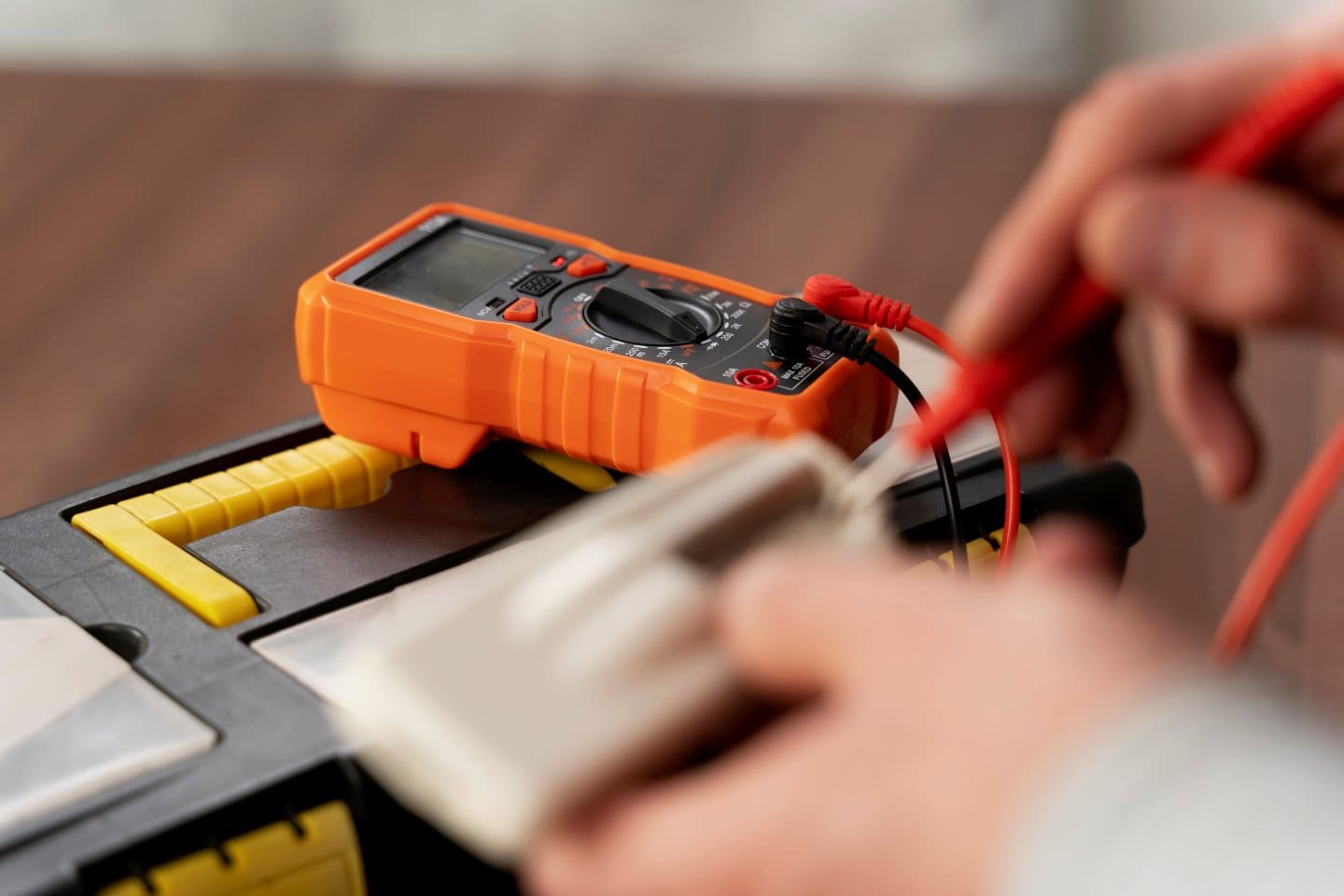
A digital multimeter (DMM) is a handheld electronic testing tool that measures electrical values such as:
- Voltage (V) – to check battery output or power lines
- Current (A) – to detect short circuits or leakage
- Resistance (Ω) – to test components and tracks
- Continuity – to find broken PCB lines or connectors
In electronics and mobile phone repair, multimeters are commonly used for:
- Checking battery health
- Diagnosing charging problems
- Finding short circuits on smartphone PCBs
- Testing connectors, coils, resistors, and fuses
For electronics repair, electricians, and mechanics, it is equally useful in appliances, power supplies, and automotive diagnostics.
Why Digital Multimeters Matter in Mobile Repair
From real workshop experience, here is the truth:
Most electronic repair mistakes happen not because of lack of skill—but because of wrong or missing measurements.
A good multimeter helps you:
- Avoid unnecessary part replacements
- Confirm faults before soldering
- Protect expensive ICs from damage
- Work faster and with confidence
Especially in PCB testing, even a small voltage difference can reveal the real problem.
Key Features to Look for in a Multimeter
Before we jump to the list, understand what actually matters.
1. Auto-Ranging
Auto-ranging automatically selects the correct measurement range.
This is very useful and saves time.
2. Continuity Beep Speed
For PCB line testing, fast and loud continuity is crucial.
3. Accuracy and Counts
- Counts (like 2000, 4000, 6000) define display resolution
- Higher counts = better precision for electronics work
4. Diode and Capacitance Testing
Helpful when checking components on motherboards.
5. Build Quality and Probe Quality
Cheap probes give wrong readings. Good probes matter more than people think.
6. Calibration Stability
A stable multimeter holds calibration longer and gives consistent results over time.
Top Digital & Analog Multimeters for Mobile Repair & Electronics in India (2026)
This list starts with low-budget, beginner-friendly multimeters, then moves toward professional-grade, high-precision instruments used by experienced technicians.
1. DT-830D Digital Multimeter (₹150–₹250)
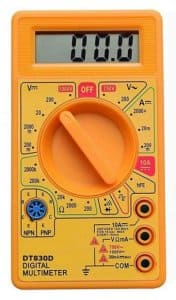
Best ultra-low-budget option for beginners
- Type: Digital (Manual ranging)
- Counts: 2000
- Best for: Absolute beginners, students, DIY, practice, learning basics
Why it’s useful:
This is one of the most commonly used starter multimeters in India. It allows basic voltage, resistance, and continuity testing, which is enough for repair fundamentals.
Limitations:
Accuracy, probe quality, and durability are basic. Not recommended for serious PCB testing.
If you are planning to start DIY mobile phone repairs, here are DIY mobile phone repair tools you need to have for performing basic repair tasks safely and effectively.
2. Mastech MAS830L Digital Multimeter (₹600)
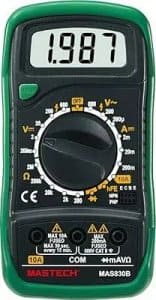
Reliable entry-level digital multimeter
- Brand: Mastech
- Type: Digital (Manual ranging)
- Counts: 2000
- Best for: Freshers and beginner electricians, technicians and mechanics
Why technicians choose it:
More stable readings than DT-830D and better build quality. Suitable for routine smartphone diagnostics.
3. Themisto TH-M98 Digital Multimeter (₹700)
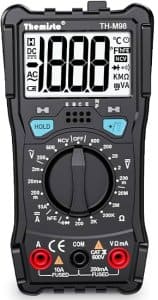
Good value for small repair shops
- Type: Digital
- Counts: 2000
- Best for: Daily electronics and mobile repair tasks
Practical insight:
Themisto models are commonly found in Indian repair markets and perform reliably for voltage and continuity checks.
4. UNI-T UT33C+ Digital Multimeter (₹750)
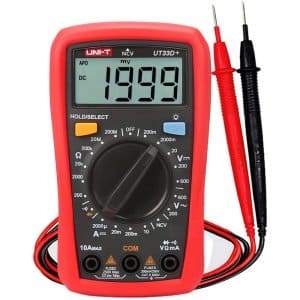
Trusted brand with better safety
- Brand: UNI-T
- Type: Digital (Manual ranging)
- Counts: 2000
- Best for: Mobile and laptop repair shops, electronics labs
Why it stands out:
Better internal protection and faster continuity response compared to generic meters.
Here is a list of essential laptop and computer repair tools every technician needs to fix laptops and desktop PCs efficiently.
5. Meco 603 Junior Digital Multimeter (₹1000)
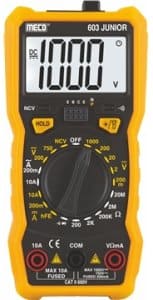
Indian-made, workshop-friendly
- Brand: MECO
- Type: Digital
- Counts: 2000
- Best for: Electronics technicians, electricians
Why it’s popular:
Stable readings and dependable quality for normal working conditions.
6. MECO 101B TRMS Autoranging Multimeter (₹1300)
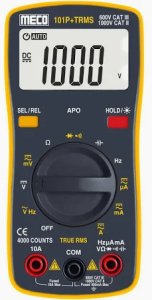
Best mid-range autoranging option
- Type: Digital (Auto-ranging, True RMS)
- Counts: 4000
- Best for: Advanced mobile repair, electricians
Expert note:
True-RMS helps when measuring unstable or noisy signals—useful in power circuits and chargers.
7. HTC 830L+ Digital Multimeter (₹700)
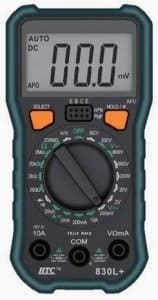
Affordable and widely available
- Brand: HTC
- Type: Digital
- Counts: 2000
- Best for: Beginners and small repair centres and small workshops
Why it works:
Simple, familiar design and easy replacement availability across India.
8. Sunshine DT9205E Digital Multimeter (₹600)
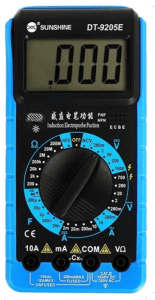
Popular in mobile repair markets
- Type: Digital
- Counts: 2000–4000 (model dependent)
- Best for: Mobile repair technicians
Why technicians like it:
Sunshine tools are common in mobile repair ecosystems and suitable for PCB testing basics.
9. HTC 360 TRE-B Analog Multimeter (₹950)
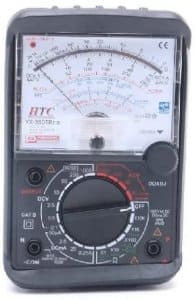
For analogue multimeter fans
- Type: Analog
- Best for: Senior technicians, legacy electronics
Important note:
Many experienced electronics technicians still prefer analogue meters for observing signal fluctuations.
Personally, I recommend digital multimeters because they are faster, easier, and more accurate for modern smartphone repair.
Premium & High-Precision Multimeters (Professional Use)
After budget and mid-range options, these multimeters are used by professional technicians, advanced hobbyists, and training institutes.
10. Sanwa PM7A Pocket Digital Multimeter (₹4,000)
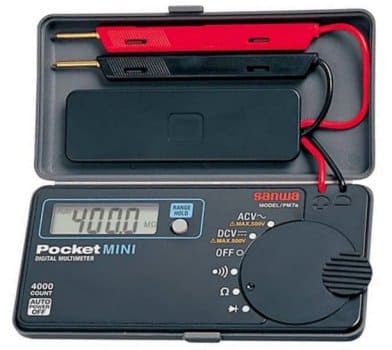
Compact Japanese precision
- Brand: Sanwa
- Type: Digital (Auto-ranging)
- Best for: Field technicians, precision work
Price range insight:
Sanwa multimeters start around ₹3,000 and can go up to ₹36,000 depending on features.
11. Fluke 101 Digital Multimeter (₹4,200)
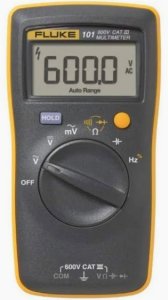
Gold standard for accuracy and durability
- Brand: Fluke
- Type: Digital (Auto-ranging)
- Counts: 6000
- Best for: Professional mobile repair, electricians
Expert opinion:
Fluke meters maintain calibration extremely well and last for years.
High-end Fluke models can cost up to ₹47,000.
12. Hioki DT4252 Digital Multimeter (₹12,000)
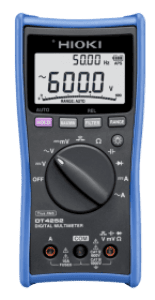
High-end Japanese precision instrument
- Brand: Hioki
- Type: Digital (True RMS, Auto-ranging)
- Counts: High-count display
- Best for: Advanced electronics, R&D, professional PCB testing
Why it’s premium:
Hioki is known for innovation, safety, and extreme measurement accuracy.
Advanced models go up to ₹30,000–₹35,000+.
Final Practical Recommendation
- Beginners / low budget: DT-830D, MAS830L, HTC 830L+
- Serious mobile repair work: UNI-T UT33C+, MECO 101B
- Professional & long-term use: Fluke 101 or Hioki DT4252
- Analogue lovers: HTC 360 TRE-B
Digital vs Analog Multimeter: Which is Better?
| Feature | Digital | Analog |
|---|---|---|
| Speed | Fast | Slower |
| Accuracy | High | Moderate |
| PCB Testing | Excellent | Limited |
| Learning Curve | Easy | Steep |
| Modern Repair | Best | Rare |
Common Mistakes When Buying a Multimeter
Many beginners make these errors:
- Choosing price over accuracy
- Ignoring probe quality
- Buying high-end features they never use
- Skipping calibration checks
- Using unsafe meters for mains electricity
A balanced choice is always better than the cheapest one.
Practical Tips from Real Repair Experience
- Always test your multimeter on a known voltage before PCB testing
- Replace probes every 6–12 months for accurate readings
- Use continuity mode carefully near IC pins
- Avoid cheap meters for live electrical work
- Keep batteries fresh—low battery causes false readings
🔒 Multimeter Safety & Best Practices (Must-Read for Every Technician)
Using a digital or analog multimeter may look simple, but incorrect handling can damage your phone, PCB, or even cause personal injury. The following safety rules and best practices are based on real-world repair scenarios and are especially important for beginners.
⚠️ Essential Safety Rules
- Never measure current in voltage mode
This is one of the most common mistakes. It can instantly damage the multimeter and the circuit. - Start with the highest range when unsure
If your multimeter is not auto-ranging, always begin with the highest range and step down gradually. - Disconnect the phone battery before PCB testing
This prevents accidental short circuits and protects sensitive ICs. - Do not use damaged probes or loose wires
Broken insulation can cause false readings or electric shock. - Avoid touching probe tips together on live circuits
This can short components and damage motherboards.
Many people want to DIY repair appliances and gadgets at home. With basic electronics knowledge, you can learn how to fix common electronic devices at home yourself.
🔧 Best Practices for Mobile Repair & PCB Testing
- Use continuity mode carefully near IC pins
Even a small slip can short adjacent pins on a PCB. - Check probe condition regularly
Worn-out probes reduce accuracy and cause unstable readings. - Keep your multimeter battery fresh
Low battery levels can give incorrect voltage and resistance values. - Use sharp, fine-tip probes for PCB work
This improves precision when working on small mobile phone tracks. - Clean probes before measurements
Dirt or oxidation on probes affects continuity and resistance readings.
🔌 Safety Tips for Electricians & Power Circuits
- Use properly rated probes for mains voltage
Especially important when testing adapters, chargers, or power supplies. - Do not exceed the multimeter’s voltage rating
Always check the maximum input rating printed on the meter. - Avoid measuring AC mains with low-budget meters
Cheap multimeters are not designed for high-energy electrical testing. - Wear insulated gloves when required
Especially during electrical or automotive diagnostics.
🛠️ Maintenance & Calibration Tips
- Store the multimeter in a dry place
Moisture affects internal components and accuracy. - Do not drop or mishandle the meter
Impact can disturb internal calibration. - Verify readings using a known voltage source
This simple check helps detect calibration drift early. - Replace probes and batteries periodically
These small steps significantly improve reliability and safety.
✅ Final Safety Reminder
A multimeter is a diagnostic tool, not just a measuring device. Safe usage protects:
- Your PCB
- Your repair tools
- Most importantly, you
Develop safe habits early, and accurate measurements will naturally follow.
Pros and Cons of Digital Multimeters
Pros
- Essential for fault diagnosis
- Improves repair accuracy
- Saves time and money
- Works across mobile, electronics, and electrical tasks
Cons
- Cheap models lack precision
- Poor probes reduce reliability
- Requires basic learning and practice
FAQs
1. Which digital multimeter is best for electronics & mobile repair beginners?
A basic auto-ranging model with fast continuity and 2000–4000 counts is ideal.
2. Is auto-ranging necessary?
Its not compulsory, but recommended for beginners.
3. What does “counts” mean in a multimeter?
Counts define how precise the display can show measurements.
4. Can electricians and mechanics use the same multimeter?
Yes, but electrical work requires higher safety ratings.
5. How often should a multimeter be calibrated?
Professional users should check calibration yearly.
6. Are affordable multimeters reliable?
For basic work, yes—if used correctly and maintained.
7. Is a digital multimeter enough for PCB repair?
Yes, for diagnostics. Advanced repair may need additional tools.
Conclusion
A digital multimeter is the backbone of mobile repair and electronics diagnostics. In 2026, Indian technicians have access to a wide range of affordable, accurate, and reliable options.
The right choice depends on:
- Your experience level
- Type of repair work
- Accuracy needs
- Budget constraints
Start simple, learn proper measurement techniques, and upgrade when your skills grow. A good multimeter does not just measure values—it builds confidence and professionalism.