Introduction
Smartphones have become an essential part of daily life. When a phone breaks, most users want it fixed quickly and affordably. For technicians and repair shop owners, one key question always comes up: Is Android easier to repair than iPhone, or is it the other way around?
This question matters for many reasons. Beginners want to choose the right platform to learn mobile repair. Shop owners want to know which devices bring better profit and fewer headaches. Even phone users are curious to know why some repairs cost more or take longer.
This article gives a clear, honest, and practical comparison of Android vs iPhone repair. It is written for Indian and global readers, especially beginners and intermediate learners. We will explain how phone design, parts availability, software locks, tools, and company policies affect repair difficulty.
By the end, you will understand:
- Which phones are easier to fix
- Which repairs are difficult and why
- What technicians face in real repair shops
- Common myths and mistakes
- Practical tips if you want to learn phone repair
Understanding Smartphone Repair Basics
Before comparing Android and iPhone repair, it helps to understand what “repair difficulty” actually means.
What Makes a Phone Easy or Difficult to Repair?
A phone is considered easier to repair when:
- It opens without special tools
- Spare parts are easily available
- Parts are modular and replaceable
- Software does not block hardware replacement
- Repair manuals or guides exist
A phone becomes harder to repair when:
- Strong glue is used instead of screws
- Parts are paired or locked to the motherboard
- Specialized tools or software are required
- Replacement parts are expensive or restricted
Repair difficulty is not just about skill. Even an experienced technician can struggle if the phone design works against repair.
Android Phones: Repair-Friendly or Not?
Android phones come from many manufacturers. This variety is both a strength and a challenge for repair technicians.
Why Android Repair Is Often Easier
In many cases, Android phones are more repair-friendly, especially older and mid-range models.
Key reasons include:
- Modular design
Many Android phones have separate components for display, battery, charging port, camera, and speaker. This allows replacing only the faulty part. - Easier battery replacement
Several Android models still allow battery replacement without removing the screen. - Wide availability of spare parts
Aftermarket parts are commonly available in local markets, especially in India. - Less software restriction
Most Android phones do not block features when parts are replaced. - Affordable tools
Standard mobile repair tools are usually enough.
Example
In local Indian repair shops, screen and battery replacement for Android phones is often done in 20–40 minutes. Even beginner technicians can handle basic Android repairs after some training.
When Android Repair Becomes Difficult
Android is not always easy to repair. Some modern Android smartphones are becoming more complex.
Common challenges include:
- Strong adhesive use
Flagship Android phones now use glue similar to iPhones. - Curved displays
These increase the risk of screen damage during removal. - Inconsistent designs
Each brand has different internal layouts, making learning slower. - Poor documentation
Official repair guides are rare.
Important Reality
There is no single “Android repair experience.” Repair difficulty varies greatly between brands, models, and price ranges.
iPhone Repair: Why Is It Considered Harder?
iPhones are known for their premium build quality. That same design often makes them harder to repair.
Reasons iPhone Repair Is Challenging
- Tightly packed internal design
Components are closely placed, leaving little room for error. - Extensive use of adhesive
Displays and batteries are heavily glued. - Part pairing and software locks
Replacing parts like the display, battery, or camera can trigger warnings or disable features. - Specialized tools required
Some repairs need specific screws and programming tools. - Higher spare part cost
Even aftermarket iPhone parts are more expensive.
Real Repair Shop Experience
Many technicians report that iPhone repairs take more time and concentration. A small mistake can damage expensive components, increasing risk.
iPhone Repairs That Are Especially Hard
Some iPhone repairs are known to be difficult even for experienced technicians:
- Face recognition-related repairs
- Motherboard-level repairs
- Camera or display replacement triggering warnings
- Battery replacement showing health issues
These problems are not about skill alone. They are often linked to software control over hardware.
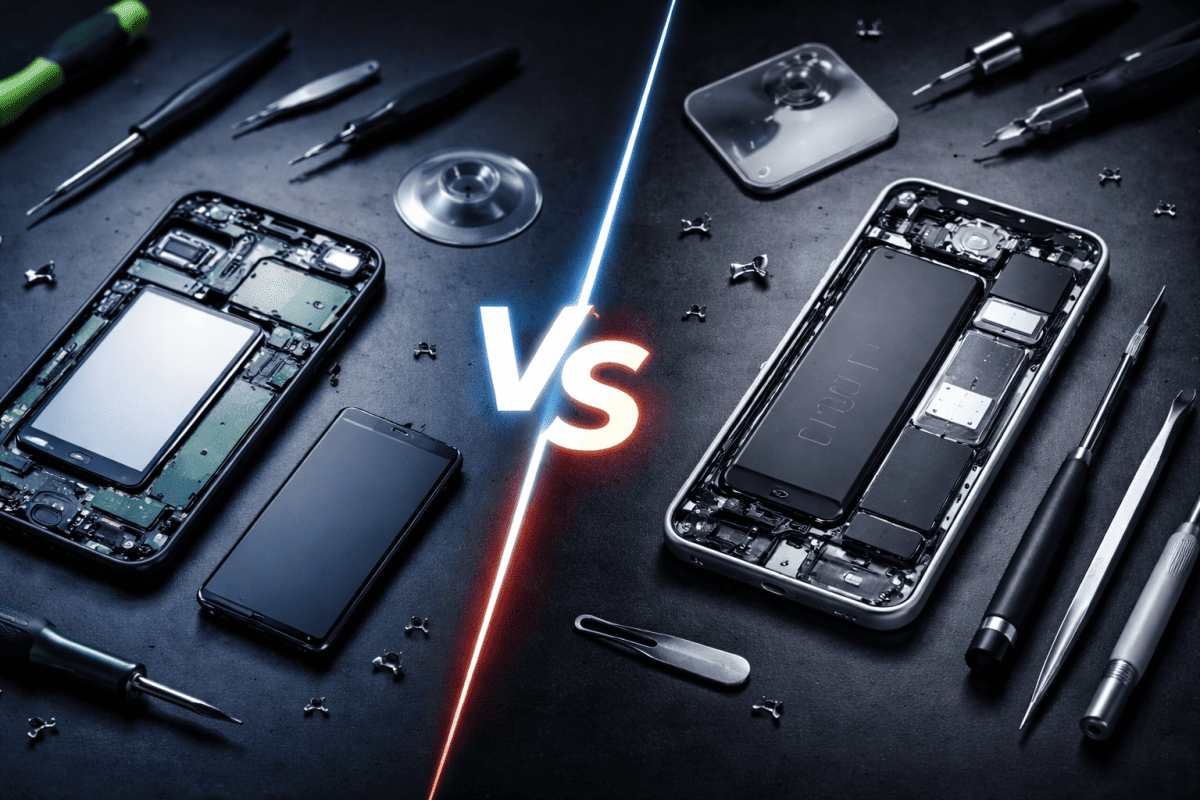
Side-by-Side Comparison: Android vs iPhone Repair
| Aspect | Android Phones | iPhones |
|---|---|---|
| Opening the phone | Often easier | Usually difficult |
| Battery replacement | Easier on many models | Harder and restricted |
| Spare parts availability | Widely available | Limited and costly |
| Software restrictions | Minimal | Significant |
| Repair cost | Generally lower | Generally higher |
| Learning curve | Easier for beginners | Steeper |
| Risk level | Moderate | High |
Tools Required: Android vs iPhone
Common Tools for Android Repair
- Screwdrivers
- Plastic opening tools
- Heat gun or heating pad
- Multimeter
- Tweezers
Additional Tools Often Needed for iPhone Repair
- Precision screwdrivers
- Strong adhesive removers
- Programming tools
- Microscopes for advanced repairs
For beginners, Android repair usually requires fewer and cheaper tools.
Software Locks and Their Impact on Repair
This is one of the biggest differences between Android and iPhone repair.
Android Software Behavior
- Parts work immediately after replacement
- No warnings in most cases
- Features usually remain functional
iPhone Software Behavior
- Replacement parts may show warnings
- Some features may stop working
- System may detect “non-genuine” components
This directly affects customer satisfaction and technician confidence.
Cost and Profitability for Technicians
Android Repair Economics
- Lower part cost
- Faster repair time
- Higher repair volume
- Suitable for small shops
iPhone Repair Economics
- Higher part cost
- Higher risk
- Higher service charges
- Profitable but risky
Many repair shops balance both, but beginners often start with Android repairs.
Common Myths About Android and iPhone Repair
Myth 1: Android phones are always easy to repair
Not true. Flagship Android models can be very complex.
Myth 2: iPhone repair is impossible without official support
Not true. Skilled technicians repair iPhones daily, but with challenges.
Myth 3: More expensive phones are always harder to repair
Not always. Some budget phones are poorly designed internally.
Practical Tips for Beginners Learning Phone Repair
- Start with Android phones
- Practice on old or broken devices
- Learn basic electronics and safety
- Avoid rushing repairs
- Invest in quality tools gradually
- Document every repair process
Experience matters more than brand when it comes to repair success.
Pros and Cons Summary
Android Repair
Pros
- Beginner-friendly
- Affordable parts
- Flexible designs
- Less software restriction
Cons
- Design inconsistency
- Quality varies by brand
- Flagship models are complex
iPhone Repair
Pros
- High repair demand
- Premium service pricing
- Strong resale value
Cons
- Software restrictions
- Expensive mistakes
- Specialized tools required
FAQs
1. Is Android easier to repair than iPhone?
In general, yes. Most Android phones are easier to repair, especially for beginners.
2. Why do iPhone repairs cost more?
Parts are expensive, repairs take longer, and risks are higher.
3. Can beginners learn iPhone repair directly?
It is possible, but starting with Android is safer and easier.
4. Are all Android phones easy to fix?
No. Repair difficulty depends on the model and brand.
5. Do software updates affect phone repair?
Yes. Software updates can introduce new restrictions, especially on iPhones.
6. Which phone brand is best for learning repair?
Mid-range Android phones are best for beginners.
7. Is mobile repair a good career option?
Yes, with proper training and experience, it can be stable and profitable.
Conclusion
When comparing Android vs iPhone repair, there is no absolute winner. However, for most technicians and beginners, Android phones are easier and safer to repair. They offer flexibility, affordability, and fewer software barriers.
iPhones, on the other hand, are harder to fix but offer higher earning potential. They demand precision, experience, and better tools.
The best approach is to understand both platforms. Start simple, build skills gradually, and choose repairs based on your comfort level. With experience, even difficult repairs become manageable.