The mobile repair industry has grown rapidly, and the demand for skilled technicians continues to rise as smartphones become more complex and expensive to replace. Many people around the world now prefer repairing their devices instead of buying new ones, which makes home-based phone repair a practical and profitable opportunity.
Starting small—right from your home—is one of the smartest ways to enter this business. It reduces costs, lowers risks, and gives you time to build confidence before expanding into a full service center. If planned well, a home-based repair business can become a strong stepping stone toward a full-time repair shop or even a multi-technician company.
“Every successful business begins with a small, confident step—consistency turns that step into a journey.”
This guide explains how to start a cell phone repair business at home in a simple, practical, and globally applicable way.
Why Start a Home-Based Phone Repair Business?
A home setup allows you to learn, experiment, and grow without the pressure of heavy investment. With millions of smartphone users worldwide, the market is large and continuously expanding. Even a small part-time business can generate good income if managed properly.
Before you begin, it helps to understand the advantages and disadvantages of running your repair service from home.
Advantages of Starting a Home-Based Repair Business
1. Low Startup Cost
The biggest advantage is the small financial requirement.
You avoid expenses such as:
- Shop rent
- Staff salaries
- Store interiors
- Utility bills
- Large inventory requirements
Most beginners need only basic tools, a clean workspace, and a small stock of popular spare parts.
2. Flexible Working Hours
Working from home allows you to:
- Set your own schedule
- Accept repairs at convenient times
- Manage studies, another job, or family commitments
- Work late nights or weekends if needed
Flexibility makes the business suitable for students, part-time earners, and stay-at-home professionals.
3. Higher Profit Margins
When expenses are low, most of what you earn becomes profit.
You don’t share revenue with staff or pay commercial rent.
Technicians who deliver high-quality work often get repeat customers, which further improves income.
4. Personalized Service
Customers appreciate technicians who:
- Communicate clearly
- Repair quickly
- Offer honest advice
Home-based businesses often build stronger relationships and customer loyalty because of the personal attention they provide. For more advantages of home based business, you should also read top 10 advantages of a home based business.
Disadvantages of Running a Repair Business From Home
1. Lower Productivity
Working at home can bring distractions like:
- Family interruptions
- TV or noise
- Irregular routine
- Lack of discipline
This reduces the number of repairs you complete each day unless you follow a structured work plan.
2. Limited Space and Customer Reach
A home workshop cannot accommodate:
- Multiple technicians
- Heavy foot traffic
- Larger equipment
- Large spare parts inventory
Some customers may prefer visiting a shop on the main road instead of a home location.
3. Professional Image Challenges
Some clients view home-based services as less professional, especially in urban areas.
However, good service quality and strong customer reviews can overcome this perception quickly.
Is a Home-Based Repair Business Right for You?
If you prefer:
- Low investment
- Flexible working hours
- Slow, steady growth
- Learning at your own pace
…then starting at home is a great option.
You can always expand later once your income becomes stable. It is always better to take smaller risks rather than taking big leaps and at the same time be more successful in cell phone repair business.
“Success rarely arrives overnight—build the foundation first, and the results will follow.”
How to Start Your Cell Phone Repair Business at Home
Here is a clear, step-by-step process that works anywhere in the world.
1. Learn the Necessary Skills
Repairing smartphones requires proper training. Modern phones use complex hardware, tiny components, and several parts. To succeed, you must understand:
- Parts of a cell phone
- Chip-level concepts
- Display technologies
- Battery and charging systems
- Software flashing
- Operating system issues
- Water-damage treatment
- Soldering and microsoldering (optional but useful)
You can learn through:
- A reputable cell phone repair training course
- Online courses
- Free tutorials and repair guides
- Practical hands-on practice
Look for training that also teaches business management, customer handling, and pricing strategies. You can learn cell phone repair at any cell phone repair school.
Some technicians also gain experience by working at a local repair shop before starting their own service. Additionally, you can also browse these websites to learn mobile phone repair online for free!
Practical Tip:
Don’t rush. Work on practice boards and old phones before repairing customer devices.
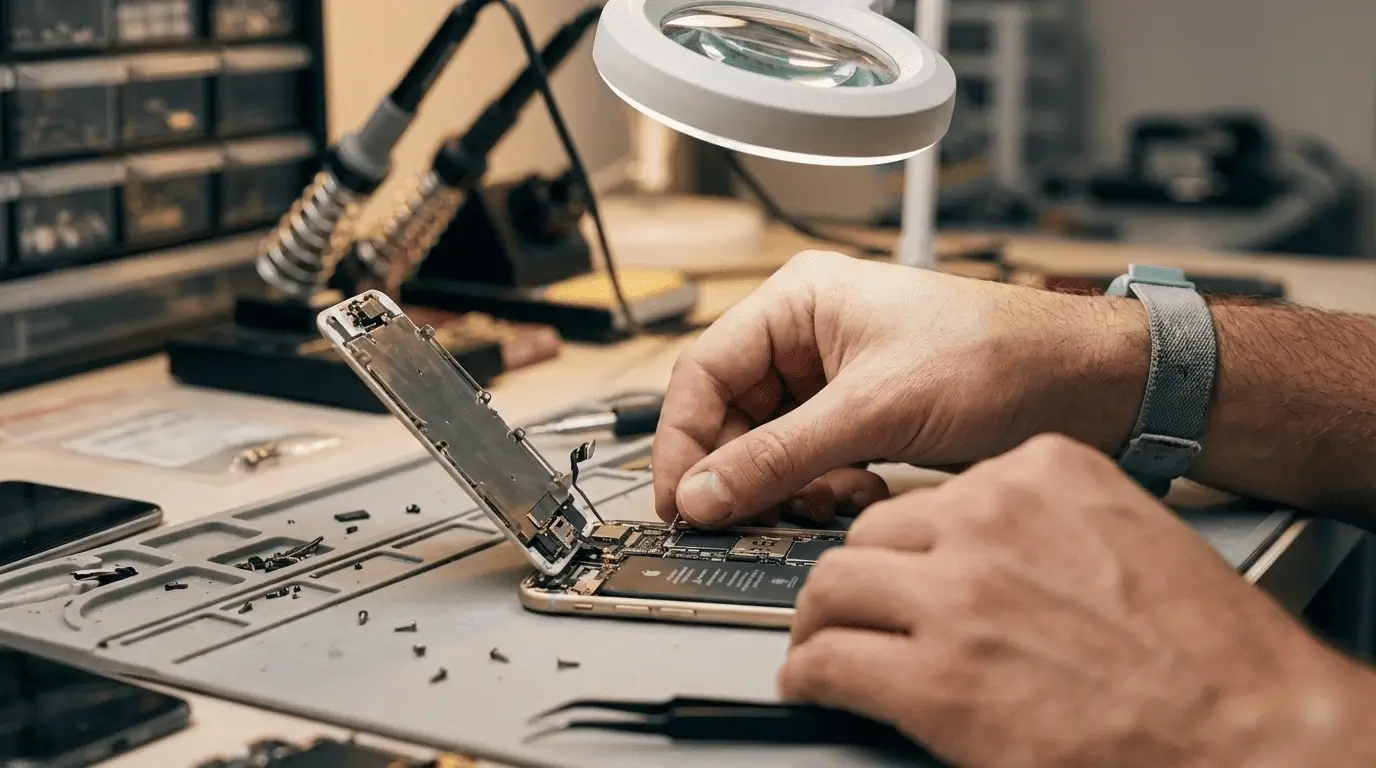
2. Set Up Your Home Workstation
A proper workstation improves your speed, accuracy, and confidence. Choose a quiet corner such as:
- Study room
- Spare bedroom
- Garage
- Basement
- Partitioned office area
Your workspace should have:
- A sturdy table and comfortable chair
- Good lighting
- A magnifying lamp
- Anti-static mat
- Storage drawers for parts
- Electric outlets for tools
Keep your workstation clean and organized to avoid losing screws or damaging components.

Essential Tools You Will Need
Depending on your service level, you may need:
- Screwdriver sets
- Opening tools
- Tweezers
- Soldering iron and hot air gun
- Multimeter
- UV lamp for OLED/GLUE repairs
- Battery tester
- Cleaning alcohol
- Heat pad
- Mobile vice stand
Start simple. You can upgrade tools as your business grows.
Read 20 Killer Tips To Be More Successful in Cell Phone Repair Business
3. Maintain an Organized Spare Parts Inventory
Spare parts are a major part of phone repair. Customers expect quick repairs, so having common parts in stock is important. Popular parts include:
- Screens (mostly for mid-range models)
- Charging flex cables
- Batteries
- Back glass panels
- Buttons and speakers
- Tempered glass
- Connectors
Use labeled boxes or containers to store parts clearly. Keep separate boxes for:
- iPhone parts
- Android parts
- Repaired vs. faulty components
Buy parts from trusted suppliers to avoid quality issues. As your business grows, order in bulk to reduce cost.
4. Create Your Business Identity
Every successful business needs:
- A name
- A logo
- A simple brand message
Choose a name that is:
- Easy to pronounce
- Clear about what you do
- Unique
- Memorable
A good identity builds trust and differentiates you from competitors. Here is an excellent article to help you choose the best cell phone repair business names.
If possible, design:
- A digital business card
- A WhatsApp catalog
- A small flyer
- A simple website or Google Business Profile
These help clients reach you easily.
5. Check Local Legal Requirements
Laws differ from country to country, but most small businesses need basic compliance, such as:
- Business registration
- Tax registration or GST/VAT ID
- Service invoices
- Repair documentation
If handling customer data (e.g., photos on phones), maintain strict privacy and confidentiality, which increases trust.
Consult a local advisor or small business consultant if needed.
6. Plan Your Logistics and Workflow
A smooth workflow ensures faster repairs and satisfied customers. Decide:
How customers will contact you:
- Phone call
- Google Business Profile
- Local classifieds
How phones will be received:
- Customers drop them at your home
- You offer pickup and drop (optional)
- You provide on-site repair for simple issues (optional)
✔ Optional On-Site Service Mention (as requested)
For small repairs like battery replacements or software fixes, you may choose to visit customers locally.
Offer this only if you feel confident and safe, and charge a small convenience fee.
7. Start Advertising Your Home-Based Business
Marketing is essential, especially because you don’t have a storefront.
Online Marketing Strategies
- Create a Google Business Profile
- Post repairs and tips on Instagram or Facebook
- Share before/after repair photos
- Ask customers for reviews
- Run small local ads (optional)
Offline Marketing Strategies
- Place a small board outside your home
- Distribute flyers in your neighborhood
- Offer referral discounts
- Inform friends, neighbors, and colleagues
A strong reputation grows faster than any advertisement.
Good service = good word of mouth.
8. Manage Time, Money, and Customer Trust
To build a sustainable business:
Be honest
Never replace working parts with low-quality alternatives.
Explain repairs clearly and transparently.
Be punctual
Complete repairs on time.
People depend heavily on their phones.
Keep records
Maintain a simple log of:
- Repairs
- Costs
- Customer details
- Spare parts used
Offer warranties where possible
Even a 7-day or 15-day service warranty builds credibility.
9. Expand Slowly and Strategically
Once your income becomes stable, you may:
- Rent a small shop
- Offer more repairs (e.g., tablets, laptops)
- Hire another technician
- Sell accessories
- Sell used/refurbished phones
- Provide screen protection services
- Offer data recovery or unlocking services
Expansion should be slow but steady.
The goal is long-term growth, not overnight success.
Final Summary
Starting a cell phone repair business at home is one of the most practical small-business ideas today. It requires low investment, provides flexible working hours, and offers high earning potential if you deliver quality service.
To succeed, you need:
- Proper repair skills
- A clean workstation
- Good spare parts
- Honest communication
- Smart advertising
- Patience and consistency
If you stay committed and continue learning, your home-based business can grow into a respected repair brand.
Read How to Learn Cell Phone Repair & Be a Certified Technician
Read How to Make More Profit in Mobile Phone Repairing Business