
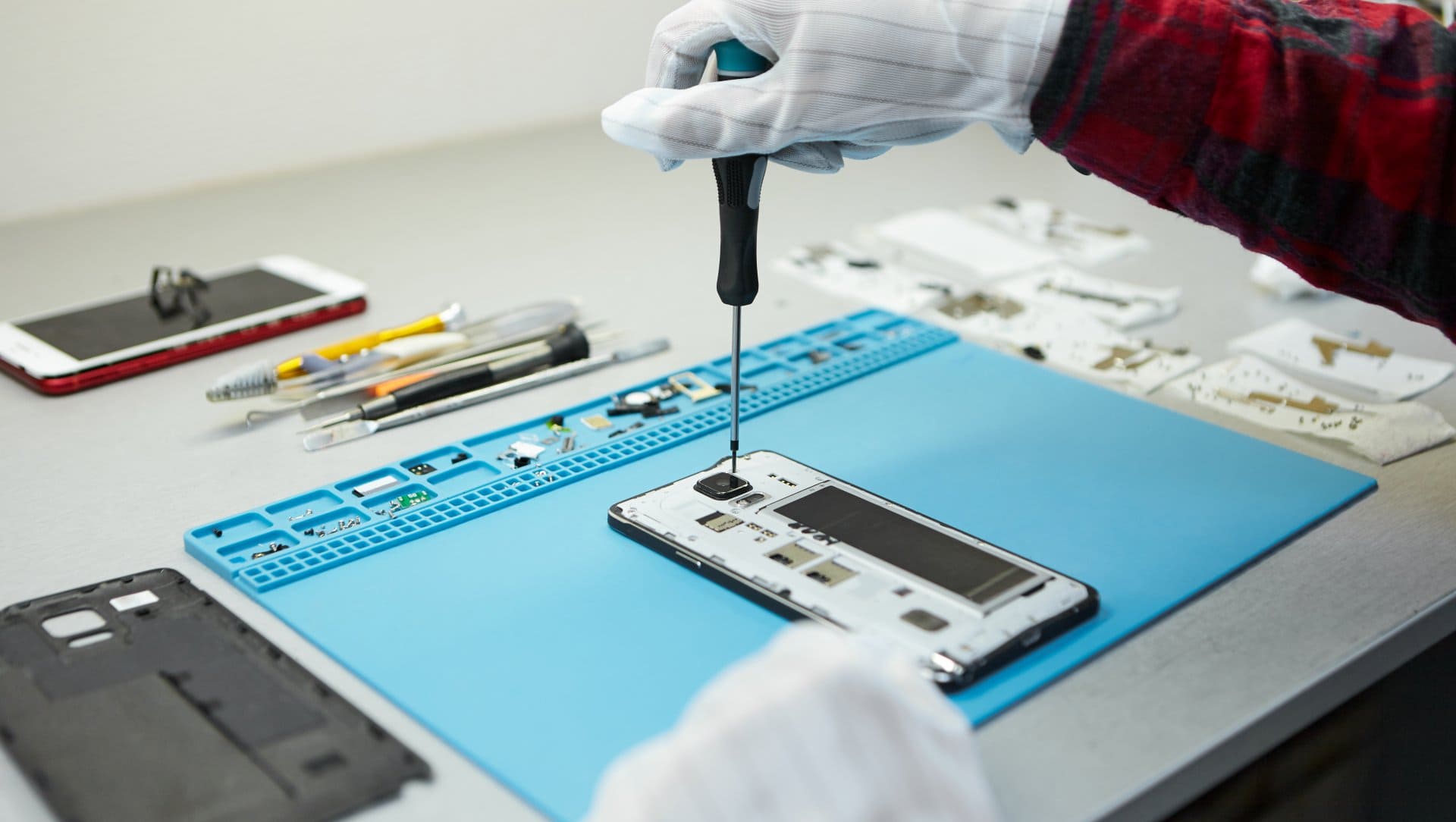
Mobile phones are everywhere. From basic calls to online payments, work, and entertainment, smartphones have become essential. As usage grows, so does the need for repair. This naturally raises a common question: So if you are planning to learn mobile phone repairing, you should know whether its easy or difficult.
Is mobile repairing easy or difficult to learn?
The honest answer is not a simple “yes” or “no.” Mobile repairing is easy to start, but takes time and practice to master. Some parts feel simple, while others are genuinely challenging.
This guide breaks down the reality—without hype or fear. You’ll learn what makes mobile repairing easy, what makes it difficult, who can learn it, how long it takes, and whether it’s worth your effort.
Choosing mobile repairing as a profession offers long-term stability and steady demand. Learn more about the benefits of a mobile phone repairing career and why it’s a smart skill-based choice.
Mobile Repairing for Beginners
For mobile repairing, you have to learn skills of diagnosing and fixing problems in a mobile device. This includes both hardware and software issues.
Common repair tasks include:
- Replacing screens, batteries, cameras, and charging ports
- Fixing speaker, mic, or network problems
- Solving software issues like hanging, boot loops, or OS errors
- Flashing Android phones or restoring iPhones
- Basic motherboard-level fault detection (advanced level)
Modern smartphones are compact and complex, but repairs usually follow logical steps.
Many people considering skill-based careers often wonder if mobile repairing is the right choice.
This article explains is mobile repairing a good career option with practical insights and real-world scope.
Why Many People Think Mobile Repairing Is Easy
Mobile repairing has become more accessible over the years. Here’s why beginners often find it manageable at the start.
1. You Don’t Need a Technical Degree
You don’t need to be an engineer. Many successful technicians started after 10th or 12th standard. While many others have not studied anything. What matters more is interest and patience.
2. Basic Repairs Are Simple
Tasks like:
- Screen replacement
- Battery change
- Charging jack repair
These are mechanical and procedural. With proper guidance, most learners pick them up quickly.
3. Clear Learning Structure
Most repair courses start from:
- Phone parts identification
- Tool handling
- Step-by-step disassembly
- Common faults and fixes
This structured approach reduces confusion.
4. Practical Learning Helps Fast
Mobile repairing is hands-on. You learn by doing, not memorizing theory. This suits people who struggle with traditional classroom learning.
5. Affordable Entry
Compared to many technical skills:
- Course fees are reasonable
- Tools are affordable
- Practice phones are easily available
This lowers the pressure for beginners.
Before enrolling, check out our updated breakdown of mobile repairing course fees in Mumbai to compare pricing and value. It will help you choose the right institute without overspending.
Where Mobile Repairing Becomes Difficult
While starting is easy, mobile repairing is not effortless. Some areas demand time and mental effort.
1. Motherboard-Level Repair Is Challenging
This is the hardest part of mobile repairing.
It involves:
- Understanding circuits
- Identifying short circuits
- Working with ICs and micro-components
- Using hot air rework stations
This cannot be learned overnight. It requires practice and mistakes.
2. Smartphones Are Getting Compact
Modern Android phones and iPhones use:
- Multi-layer PCBs
- Tiny solder points
- Fragile connectors
One wrong move can damage the phone. This makes care and precision very important.
3. Continuous Learning Is Required
Phone models change every year. New problems appear with:
- Software updates
- New display technologies
- Advanced security features
You must keep learning to stay relevant.
4. Patience Is Essential
Not every phone gets fixed on the first attempt. Some faults are time-consuming. If you dislike trial-and-error work, this field may feel frustrating.
Is Mobile Repairing Hard for Beginners?
For complete beginners, mobile repairing is moderately easy if learned correctly.
Easy for beginners:
- Identifying phone parts
- Using basic tools
- Replacing displays and batteries
- Solving common Android software issues
Difficult for beginners:
- Understanding components
- Soldering minute parts
- Working on hot air rework station
Most learners start with easy repairs and slowly move upward.
Skills You Need to Learn Mobile Repairing
You don’t need extraordinary talent. You need the right mindset.
Important skills include:
- Basic hand-eye coordination
- Problem-solving ability
- Patience and focus
- Willingness to practice repeatedly
Technical skills are taught. Attitude comes from you.
How Long Does It Take to Learn Mobile Repairing?
This depends on your goals.
Basic Level (1 month to 1 year)
You have to learn:
- Phone anatomy
- Screen and battery replacement
- Charging problems
- Basic Android flashing
- Common hardware faults
- Multimeter usage
- Motherboard-level repairs
- IC replacement
- Short detection
- Hardware & Software troubleshooting
Learning takes dedication and lots of practice.
Is Mobile Repairing Easier Than Other Technical Skills?
Compared to many technical careers, yes—at least at the entry level.
Compared to:
- Engineering courses → mobile repairing is simpler
- Laptop motherboard repair → mobile repair is easier to start
- Coding → mobile repairing suits practical learners
Mobile phone repairing is more interesting and challenging than most other skilled trades.
Can Anyone Learn Mobile Repairing?
Mobile repairing is suitable for:
- Students looking for skill-based careers
- School dropouts
- Working professionals wanting extra income
- Small business owners
- People who prefer practical work
It may not suit:
- Those who dislike fine manual work
- People expecting quick money without effort
- Those unwilling to keep learning
Mobile repairing is gaining popularity as a practical and income-focused profession.
Read this article to understand mobile repairing career scope, skills, and salary potential in simple terms.
Common Myths About Mobile Repairing
Myth 1: You Need High Intelligence
Reality: You need consistency, not genius.
Myth 2: Only Engineers Can Repair Phones
Reality: Most technicians are non-engineers.
Myth 3: It’s Too Late to Start
Reality: Age matters less than interest.
Myth 4: Mobile Repairing Is Dying
Reality: Smartphone usage is increasing, not decreasing.
Real-Life Learning Experience (Ground Reality)
Most learners experience this pattern:
- Excitement in the first week
- Confusion during motherboard topics
- Confidence after fixing real phones
- Skill improvement through mistakes
This is normal. Every technician goes through it.
Is Mobile Repairing Stressful?
It depends on how you work.
Stress increases when:
- You rush repairs
- You skip proper diagnosis
- You take jobs beyond your skill level
Stress reduces when:
- You follow step-by-step methods
- You communicate honestly with customers
- You keep learning and practicing
With experience, confidence replaces stress.
Career Scope: Is It Worth Learning?
Mobile repairing offers:
- Self-employment opportunities
- Shop-based income
- Freelance repair work
- Teaching or training options
- Part-time side income
It may not make you rich overnight, but it can provide stable and independent earnings. If you are confused about mobile repairing job vs mobile repairing shop or business, this article helps you compare salary, investment, and growth opportunities.
Advantages of Learning Mobile Repairing
- Low entry barrier
- Practical skill for life
- Demand in urban and rural areas
- No dependency on office jobs
- Flexible working hours
Disadvantages You Should Know
- Initial learning curve
- Requires continuous updates
Being aware of both sides builds realistic expectations.
Final Verdict: Easy or Difficult?
Mobile repairing is easy to begin, but not difficult to master!
If you:
- Start with basics
- Learn from proper guidance
- Practice regularly
- Stay patient
Then mobile repairing becomes manageable and rewarding.
It’s not magic. It’s a skill—like driving or cooking. Simple at first, deeper as you go.
Helpful Summary
- Mobile repairing is beginner-friendly
- Advanced repairs require time and patience
- Anyone with interest can learn it
- Practice matters more than theory
- Long-term scope is still strong
If you enjoy working with your hands and solving real problems, mobile repairing can be a practical and satisfying skill to learn.