Introduction
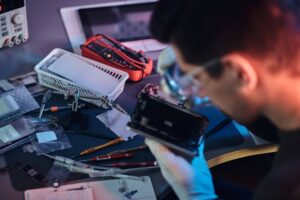
Modern electronics run on one critical component: the PCB motherboard. From smartphones, computers and laptops to industrial machines and medical equipment, printed circuit boards are everywhere. When these boards fail, replacing them is expensive. Repairing them, however, is a valuable skill—and a growing career option.
An electronics PCB motherboard repair course teaches you how to diagnose, troubleshoot, and fix faults at the circuit level. For many students, technicians, and career switchers, this field offers a practical path into electronics without requiring an engineering degree.
This guide explains everything you need to know before enrolling:
- What PCB motherboard repair really means
- What the course teaches
- Fees and duration
- Career and job opportunities
- Skills required and common misconceptions
The goal is clarity, not hype—so you can decide if this course is right for you.
What Is a PCB Motherboard?
A Printed Circuit Board (PCB) is a flat board that electrically connects and mechanically supports electronic components. The motherboard is the main PCB in a device, responsible for communication between the processor, memory, power supply, and peripherals.
Where PCB motherboards are used
- Smartphones and feature phones
- Laptops and desktop computers
- Air Conditioners (AC) and Home Appliances
- TVs and set-top boxes
- Power supplies and chargers
- Automotive electronics
- Medical and industrial equipment
Because these circuit boards are complex and expensive, repair is often preferred over full replacement—especially in cost-sensitive markets.
What Is PCB Motherboard Repair?
PCB motherboard repair focuses on component-level troubleshooting, not just replacing entire boards.
Typical repair tasks include
- Identifying short circuits and open circuits
- Replacing damaged ICs, capacitors, resistors, and connectors
- Repairing broken tracks and pads
- Solving power-related faults
- Diagnosing no-power, dead, or overheating issues
Unlike basic electronics servicing, motherboard repair requires precision, patience, and an understanding of how circuits behave in real-world conditions.
This PCB repair basics for beginners article helps you understand essential components, circuits, and common repair principles before working on real boards.
Who Should Consider a PCB Repair Course?
This course is suitable for:
- Beginners interested in electronics repair
- Technicians wanting to upgrade skills
- ITI or diploma holders seeking specialization
- Entrepreneurs planning to start a repair business
- Engineers who want hands-on practical experience
You do not need advanced mathematics or coding knowledge. What matters more is interest in electronics and willingness to practice.
This detailed breakdown of motherboard faults and repair methods helps you identify hardware issues early and avoid unnecessary system replacements.
What Does an Electronics PCB Motherboard Repair Course Teach?
Most structured courses progress from basics to advanced diagnostics.
1. Electronics Fundamentals
- Voltage, current, resistance
- AC vs DC
- Ohm’s law (applied, not theoretical)
- Series and parallel circuits
2. Component Identification
- Resistors, capacitors, inductors
- Diodes and transistors
- IC packages (SMD, BGA, QFN)
- Connectors and sockets
3. Tools and Equipment
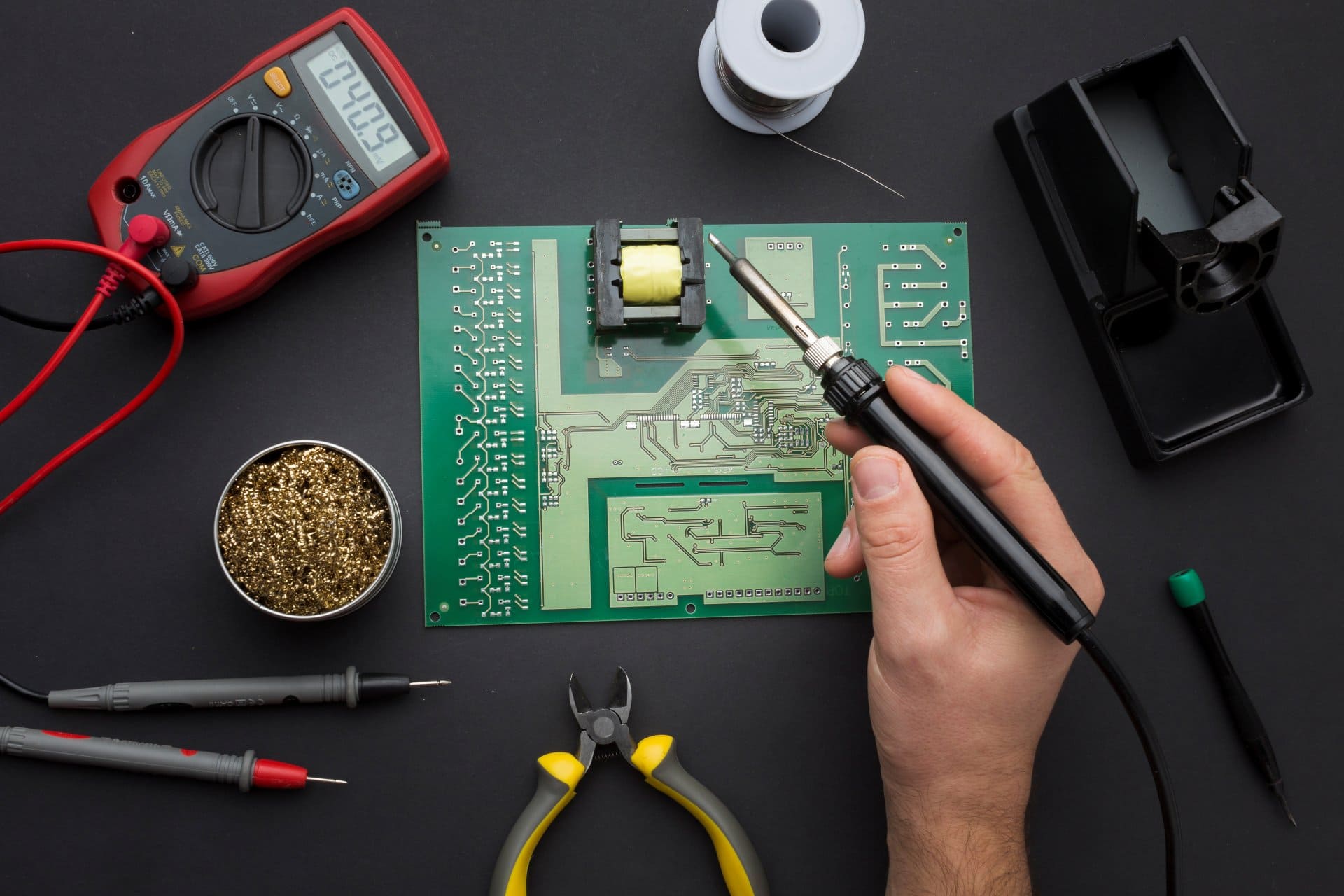
- Digital multimeter usage
- DC power supply testing
- Hot air rework station handling
- Soldering iron techniques
- Microscope basics
4. Soldering and Desoldering
- Through-hole soldering
- SMD component handling
- IC removal and replacement
- Pad and track repair
5. Circuit Analysis
- Reading basic schematics
- Understanding power sections
- Signal flow concept
- Common fault patterns
6. Fault Diagnosis Techniques
- Short detection methods
- Voltage line testing
- Resistance comparison
- Thermal fault detection
7. Device-Specific Motherboards
- Logic boards
- Supporting motherboards
- Power supply PCBs
Many good courses emphasize hands-on practice using real faulty boards rather than only theory.
Learn how to identify damaged components and restore your system using this motherboard PCB short circuit repair guide written with clear steps and real-world repair logic.
Course Duration: How Long Does It Take?
The duration varies depending on course depth and training format.
Typical course durations
| Course Type | Duration |
|---|---|
| Basic PCB Repair | 1–2 months |
| Intermediate Course | 2–3 months |
| Advanced Motherboard Repair | 3–6 months |
| Weekend / Part-Time | 4–6 months |
Short courses focus on specific devices like home appliances, while longer programs cover multiple board types.
PCB Motherboard Repair Course Fees
Fees depend on location, institute quality, and training depth.
Average fees in India
| Course Level | Fee Range (INR) |
|---|---|
| Basic Course | ₹10,000 – ₹15,000 |
| Intermediate Course | ₹15,000 – ₹25,000 |
| Advanced Course | ₹25,000 – ₹30,000+ |
Global fee range
- Short online programs: USD 150–400
- Hands-on offline training: USD 500–1500
Some training institutes provide limited hands-on exposure. Always check what equipment and practice time are included.
Online vs Offline PCB Repair Courses
Online Courses
Pros
- Flexible schedule
- Lower cost
- Useful for theory and revision
Cons
- Limited hands-on practice
- No real-time fault troubleshooting
- Less tool exposure
The All About Circuits electronics textbook explains core concepts like voltage, current, resistance, and basic circuit behavior in simple language, making it ideal for beginners entering PCB motherboard repair.
Offline Courses
Pros
- Real motherboard handling
- Instructor guidance
- Better confidence building
Cons
- Higher cost
- Fixed location and timings
For beginners, offline or hybrid training is generally more effective.
Skills You Develop During the Course
A good PCB repair course builds both technical and practical skills.
Technical skills
- Circuit-level troubleshooting
- Safe handling of electronic components
- Precision soldering
- Logical fault analysis
Practical skills
- Patience and attention to detail
- Documentation of repair steps
- Cost estimation for repairs
- Time management during diagnosis
These skills are transferable across many electronics repair domains.
In-circuit testing (ICT) is a widely used method for verifying PCB function by testing component integrity and connectivity, which is valuable for intermediate learners exploring professional diagnostic techniques.
Common Mistakes Beginners Make
Learning PCB repair takes time. New learners often struggle due to:
- Skipping basic electronics concepts
- Using excessive heat during soldering
- Replacing parts without proper diagnosis
- Ignoring ESD (electrostatic discharge) safety
- Expecting quick mastery without practice
A structured course helps avoid these errors by teaching safe and systematic methods.
Job Opportunities After PCB Motherboard Repair Course
1. Repair Technician
Work in service centers repairing smartphones, laptops, and electronic devices.
2. Electronics Service Engineer
Handle diagnostics and advanced repair in authorized or independent centers.
3. Freelance Repair Specialist
Offer specialized motherboard repair services to local shops.
4. Business Owner
Start your own electronics repair shop.
5. Industrial Maintenance Technician
Repair PCBs used in machines, inverters, and automation systems.
Salary and Income Expectations
Income depends on skill level, location, and type of work.
Average earnings (India)
- Entry-level technician: ₹12,000–₹15,000/month
- Skilled technician: ₹15,000–₹40,000/month
- Freelance repair (per board): ₹500–₹3,000
Global income
- USD 2,000–4,000/month for experienced technicians in some regions
Many technicians increase income through specialized repairs rather than volume work.
Is PCB Motherboard Repair a Good Career?
Pros
- High demand for repair skills
- Low initial investment
- Practical and skill-based
- Opportunities for self-employment
Cons
- Requires patience and practice
- Eye strain and precision work
- Learning curve can be slow initially
For people who enjoy hands-on technical work, it can be a stable and rewarding career.
Who Should NOT Choose a PCB Motherboard Repair Course
This course may not be suitable if you dislike hands-on technical work, struggle with patience and precision tasks, or expect quick income without regular practice.
How to Choose the Right PCB Repair Course
Before enrolling, check:
- Hands-on training time
- Instructor experience
- Tools provided during training
- Course syllabus depth
- Post-training support or guidance
Avoid courses that promise unrealistic income or “instant expert” claims.
FAQs
1. Do I need an electronics degree for PCB motherboard repair?
No. Basic electronics understanding is enough. Many successful technicians start without formal degrees.
2. Is PCB repair difficult to learn?
It can be challenging initially, but structured training and practice make it manageable.
3. Can I learn PCB repair online only?
Online learning helps with theory, but hands-on practice is essential for real repair work.
4. What tools are required after completing the course?
Basic tools include a multimeter, soldering station, hot air gun, power supply, and microscope.
5. Is motherboard repair safe?
Yes, when proper safety measures like ESD protection and correct handling are followed.
6. Can this skill be used outside mobile repair?
Yes. PCB repair applies to laptops, power electronics, industrial boards, and more.
Conclusion
An electronics PCB motherboard repair course offers a practical, skill-based entry into the electronics repair industry. It focuses on real-world troubleshooting, not just theory, and opens doors to jobs, freelancing, or entrepreneurship.
Understanding fees, duration, and career scope helps set realistic expectations. The key to success lies in consistent practice, choosing the right training program, and developing diagnostic thinking.
If you enjoy problem-solving and working with electronic devices, PCB motherboard repair can be a valuable long-term skill—one that remains relevant as long as electronics exist.