

Many students, freshers, and working professionals now want to learn mobile phone repairing as a practical, income-generating skill. But one question confuses most beginners:
Should you choose an offline or online mobile phone repairing course?
Both options promise learning, certificates, and career opportunities. However, the learning experience, skill depth, and job readiness can differ a lot.
“Choosing the right learning method matters as much as choosing the skill itself.”
This article explains the real difference between online and offline mobile phone repairing courses, using practical insights, technician experience, and industry realities. By the end, you will clearly know which option is best for you.
Who Joins Mobile Phone Repairing Course?
People who want to make a career in mobile phone repair join mobile repairing course which teaches you how to diagnose and fix problems in smartphones and other mobile devices. This includes both hardware and software repairs. The training also includes motherboard or chip-level repairing.
Typical learning areas include:
- Display and battery replacement
- Charging and power issues
- Speaker, microphone, and camera repair
- Software problems and flashing
- Diagnostics and fault finding
The goal is simple: make you job-ready as a mobile repair technician.
Understanding Online Mobile Phone Repairing Courses
Online mobile repairing courses are delivered through:
- Video lessons
- Recorded tutorials
- Live online classes
- PDFs and digital notes
You usually learn from home using a phone, tablet, or computer.
What Online Courses Teach Well
Online training is good for:
- Understanding phone components
- Learning repair theory
- Watching repair procedures
- Getting basic software knowledge
- Learning repair concepts step by step
Many online courses explain:
- How a smartphone works
- Common phone problems
- Repair workflow and safety
Advantages of Online Mobile Repairing Courses
Online learning offers some clear benefits:
- Learn from anywhere
- Flexible timing
- Usually lower cost
- Good for theory and basics
- Helpful for revision and reference
For people with:
- Limited time
- Job or college commitments
- Budget restrictions
online courses can be convenient.
Limitations of Online Mobile Repairing Courses
However, mobile repairing is a hands-on skill, and this is where online learning struggles.
Common limitations include:
- No real phone handling
- No practical training
- No real soldering practice
- Limited confidence building
- No exposure and training with real mobile repairing tools
Watching a repair video is very different from actually fixing a phone.
Understanding Offline Mobile Phone Repairing Courses
Offline courses are lab-based and practical. You learn directly in a repair lab or training center using real smartphones and tools.
What Offline Courses Focus On
Offline training emphasizes:
- Hands-on repair practice
- Real phone fault diagnosis
- Tool handling and safety
- Step-by-step repair guidance
- Live problem solving
This builds real technician confidence.
The time and duration needed to learn mobile repairing depends on the student’s learning speed and dedication. On average, it takes around 3 to 6 months to gain practical mobile repairing skills.
Advantages of Offline Mobile Repairing Courses
Offline training offers strong practical benefits:
- Direct practical and experience
- Real repair exposure
- Trainer guidance during mistakes
- Confidence handling customer phones
- Better job readiness
“Skill grows faster when learning happens in real conditions.”
For a technical trade like mobile repairing, practice matters more than theory.
Limitations of Offline Mobile Repairing Courses
Offline courses also have some drawbacks:
- Fixed schedule
- Higher fees in some institutes
- Travel required
- Limited seats
However, these limitations often come with better skill development. Want to know the actual fees of mobile repairing courses? Here’s a complete guide to mobile phone repairing course fees in Mumbai, including hidden charges and certification details.
Online vs Offline Mobile Phone Repairing Course: Key Differences
Let’s break it down clearly.
1. Learning Style
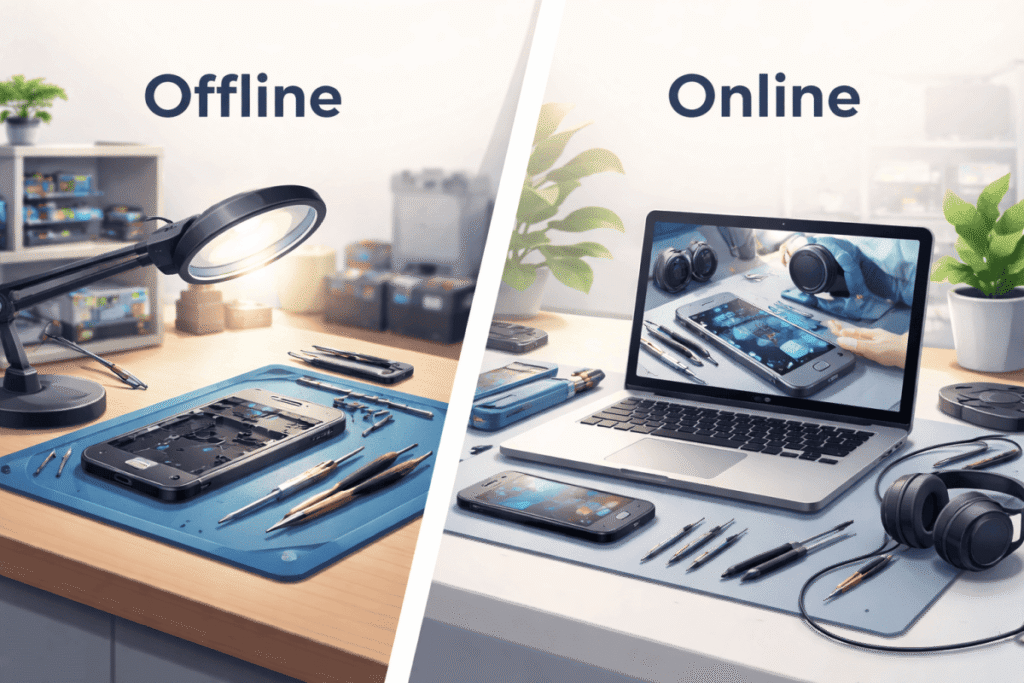
- Online: Mostly visual and theoretical
- Offline: Both practicals and explanation
Mobile repairing requires muscle memory, tool control, and confidence, which develop faster offline.
2. Practical Training
- Online: Limited or none
- Offline: Core focus
Repair skills improve only when:
- You open devices
- Make mistakes
- Fix real faults
Offline courses provide this environment.
3. Confidence Level
- Online: Knowledge-based confidence
- Offline: Skill-based confidence
Customers trust technicians who are confident with devices, not just theory.
4. Job Readiness
- Online: Good for basic understanding
- Offline: Better for real job roles
Many repair shops prefer technicians who have worked on real phones, not just watched videos.
5. Trainer Support
- Online: Limited interaction
- Offline: Direct guidance
Immediate feedback helps correct mistakes early.
A beginner who starts offline usually becomes job-ready faster.
“Mobile repairing is learned with hands, not just eyes.”
Cost Comparison: Online vs Offline
General observation:
- Online courses are cheaper
- Offline courses cost more
But cost should be measured against:
- Skill gained
- Job opportunities
- Repair confidence
Paying less but learning less can be more expensive in the long run.
Certificate Value: Online vs Offline
Certificates matter less than skills in mobile repairing.
Repair shop owners usually test:
- Repair ability
- Diagnostic skills
- Confidence
A technician with real skills is preferred over someone with only certificates.
There are many alternative career courses available for school and college dropouts in India. Choosing the right skill-based course can open doors to stable income and growth.
Real-Life Example
Two students complete mobile repairing training.
Student A:
- Took an online course
- Watched videos
- Knows theory
Student B:
- Took an offline course
- Repaired multiple phones
- Made mistakes and learned
When applying for a job, Student B is more confident and more employable.
Common Mistakes While Choosing a Course
Avoid these mistakes:
- Choosing only by low fees
- Ignoring practical exposure
- Trusting marketing promises
- Skipping hands-on practice
Skill speaks louder than certificates.
Online vs Offline: Pros and Cons Summary
Online Courses Are Good If:
- You want basic knowledge
- You need flexibility
- You already have repair experience
Offline Courses Are Better If:
- You want a repair job
- You want real skills
- You want confidence and practice
You are welcome to join Prizm Institute’s mobile repairing course in Mumbai and take your first step toward a successful career. It is designed to help students learn hands-on mobile repair skills.
Final Verdict: Which Course Is Best ?
Offline mobile repairing course is always the best.
Why an Offline Mobile Repairing Course Is Best?
- Practical training not just videos
- Direct guidance from trainers
- Immediate mistake correction, which improves learning speed
- Better understanding of tools like multimeter, soldering iron, hot air gun, and microscope
- Improved job readiness for repair shops and service centers
- Learning by doing, which builds long-term skills
If your goal is to work as a mobile phone repair professional, offline training gives a stronger foundation.
“In mobile repairing, practice creates professionals.”
Frequently Asked Questions (FAQs)
1. Which is better: an offline or online mobile repairing course?
Both have benefits. Offline courses are better for hands-on practice, while online courses are useful for learning basic concepts and theory at your own pace.
2. Can I learn mobile repairing properly through an online course?
Online courses can help you understand fundamentals, tools, and repair processes. However, practical experience is limited, which is important for mastering mobile repairing skills.
3. Why do many students prefer offline mobile repairing courses?
Offline courses offer real devices, live practice, and trainer guidance, which helps students learn faster and gain confidence in handling repairs.
4. Are online mobile repairing courses cheaper than offline ones?
Yes, online courses are usually more affordable and flexible. Offline courses may cost more because they include tools, lab access, and practical training.
5. Which option is better for beginners?
For beginners, offline mobile repairing courses are generally better because they provide hands-on training and immediate support, which is crucial when learning repair skills.
Final Summary
Choosing between online and offline mobile phone repairing courses depends on your goal.
Mobile repairing is a practical trade. The more you work with real devices, the faster you grow.
Choose the path that builds real skills, confidence, and long-term value.