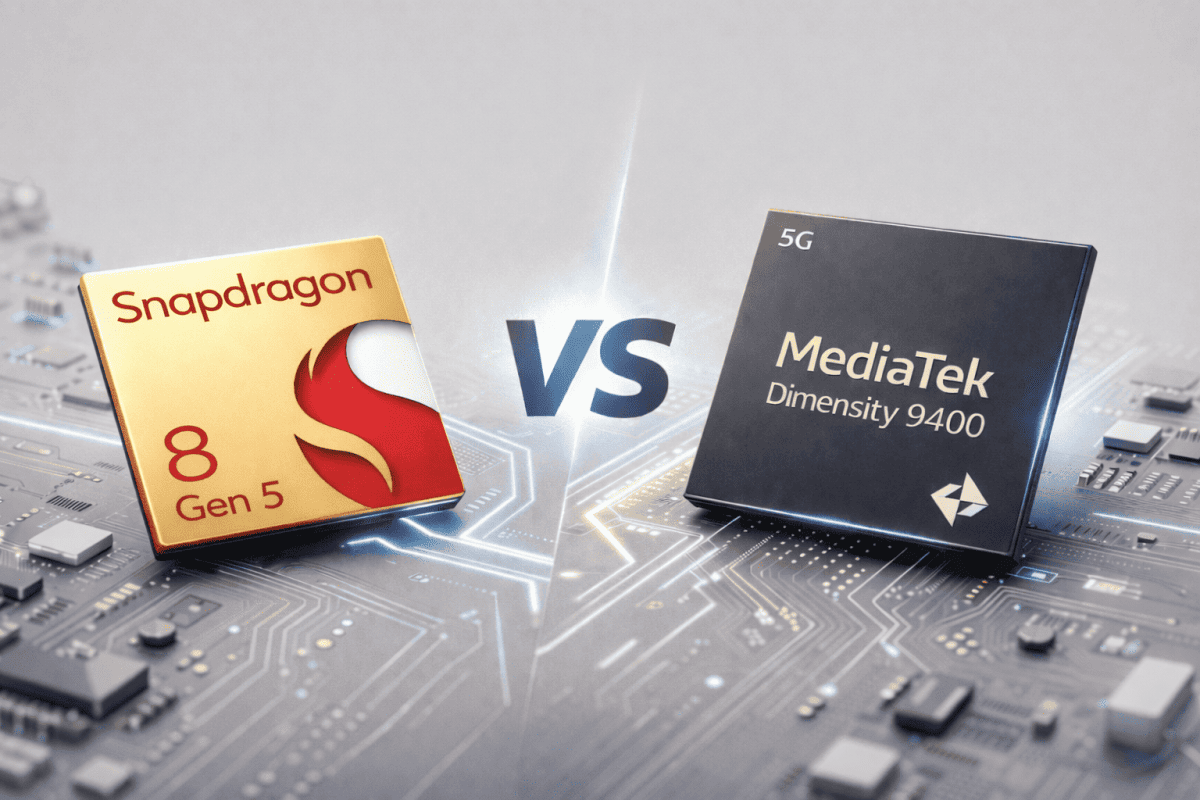
Mobile gaming has moved far beyond casual puzzle titles. Today’s Android phones handle console-level graphics, high refresh rates, and long gaming sessions. At the center of this experience is the chipset. Two names dominate the flagship Android space right now: Snapdragon 8 Gen 5 and Dimensity 9400.
If you are buying a new smartphone mainly for gaming, this comparison matters. In this article, we test and explain how both chipsets perform in real gaming scenarios—not just on paper. We focus on frame rates, GPU behavior, sustained performance, heat management, and battery efficiency, using currently accepted and verified information.
Why Gaming Performance Depends on the Chipset
A smartphone chipset controls almost everything that affects gaming:
- CPU handles game logic and background tasks
- GPU renders graphics and visual effects
- AI engine supports upscaling, frame pacing, and thermal control
- Memory controller affects loading times and multitasking
- Power management determines heat and battery drain
A strong gaming phone is not just about peak power. It must deliver stable performance over long sessions without overheating or throttling.
Quick Overview: Snapdragon 8 Gen 5 vs Dimensity 9400
Before we go deeper, here is a high-level comparison.
Snapdragon 8 Gen 5 (Overview)
- Flagship Qualcomm processor for premium Android phones
- Known for strong GPU optimization and wide game developer support
- Focuses on sustained performance and efficiency
- Commonly used in high-end gaming phones and flagships
Dimensity 9400 (Overview)
- Flagship MediaTek processor aimed at top-tier performance
- Emphasizes high CPU and GPU output
- Strong improvements in power efficiency compared to earlier generations
- Increasing adoption by premium Android brands
Both are designed for flagship smartphones and target serious gamers. Here is a detailed and easy-to-understand comparison of Qualcomm Snapdragon vs MediaTek Dimensity processors in terms of gaming. This comparison explains their gaming performance, strengths, weaknesses, and key differences, helping gamers choose the right chipset for smooth gameplay and better graphics.
Gaming Test Methodology (What Really Matters)
To keep this comparison practical, we focus on real-world usage instead of marketing numbers.
What we evaluate:
- Average FPS during gameplay
- Frame stability (less stutter = better experience)
- Thermal behavior after 20–30 minutes
- Battery drain during gaming sessions
- Consistency under extended load
Game types considered:
- Competitive shooters (high FPS requirement)
- Open-world RPGs (CPU + GPU stress)
- Battle royale games (thermal and sustained load test)
GPU Performance: The Core of Mobile Gaming
Snapdragon 8 Gen 5 GPU Performance
Snapdragon chipsets traditionally excel in GPU optimization. The 8 Gen 5 continues this trend.
Key strengths:
- Smooth frame pacing in supported games
- Better optimization with popular Android game engines
- Strong performance at high refresh rates (120Hz and above)
In real gaming:
- Maintains stable FPS even during long matches
- Fewer sudden frame drops
- Graphics settings stay consistent without aggressive throttling
This makes it ideal for players who value smoothness over raw numbers.
Dimensity 9400 GPU Performance
Dimensity 9400 focuses on delivering strong raw GPU output.
Key strengths:
- High peak graphical performance
- Handles ultra graphics settings well
- Strong initial FPS in short sessions
In real gaming:
- Delivers excellent visuals at max settings
- Slightly more aggressive power usage under load
- Performance remains strong, but thermal control depends more on phone design
For gamers who play shorter, intense sessions, this chipset feels very powerful. If you want a good gaming smartphone without spending too much, here are some of the best gaming smartphones under Rs 15,000 in India.
FPS Stability: Average Numbers vs Real Experience
Snapdragon 8 Gen 5 FPS Behavior
- FPS remains consistent during long sessions
- Less fluctuation when the phone heats up
- Better for competitive games where timing matters
Dimensity 9400 FPS Behavior
- Very high FPS at the start
- Minor dips after extended gameplay in poorly cooled phones
- Still smooth, but not always as stable as Snapdragon under stress
Important takeaway:
High peak FPS looks good in benchmarks, but stable FPS feels better in real gameplay.
Thermal Performance: Heat Makes or Breaks Gaming
Snapdragon 8 Gen 5 Thermal Control
- Gradual temperature rise
- Better thermal balancing
- Less aggressive throttling
Phones using this chipset usually stay comfortable to hold during long gaming sessions.
Dimensity 9400 Thermal Control
- Warms up faster under heavy load
- Relies more on phone cooling systems
- Well-cooled phones perform excellently, average ones may throttle sooner
This means the gaming experience on Dimensity 9400 depends more on phone design and cooling hardware.
Sustained Gaming: 30–60 Minute Sessions
Snapdragon 8 Gen 5
- Maintains performance over time
- Frame rates stay close to initial levels
- Ideal for long gaming sessions
Dimensity 9400
- Strong early performance
- Slight performance reduction after prolonged play
- Still very capable, especially in premium phones
For marathon gaming, Snapdragon holds a small advantage.
Battery Efficiency During Gaming
Battery drain matters if you play on the go.
Snapdragon 8 Gen 5
- Better power efficiency at similar performance levels
- Slower battery drain in long sessions
- More predictable power usage
Dimensity 9400
- Slightly higher battery consumption at peak performance
- Improved efficiency compared to older Dimensity chips
- Battery life depends heavily on game settings
If battery life is a priority, Snapdragon generally performs better.
Game Compatibility and Optimization
Snapdragon Advantage
- Widely supported by Android game developers
- Faster updates for game-specific optimizations
- Better compatibility with popular gaming titles
Dimensity Progress
- Rapidly improving developer support
- Most popular games now run smoothly
- Some niche titles may still favor Snapdragon
This gap is smaller than before, but Snapdragon still has an edge in ecosystem maturity.
Real-Life Gaming Scenarios
Competitive Gamers
If you play shooters or esports-style games:
- Snapdragon 8 Gen 5 offers more consistent performance
- Better frame pacing and thermal stability
Casual and Visual Gamers
If you enjoy graphics-heavy games:
- Dimensity 9400 delivers impressive visuals
- Excellent short-session performance
Long Gaming Sessions
- Snapdragon 8 Gen 5 is more reliable
- Less heat and steadier FPS
Gaming on Smartphones: Hardware Still Matters
Even the best chipset cannot fix:
- Poor cooling systems
- Low refresh-rate displays
- Weak batteries
For best results, always consider:
- Phone cooling design
- Screen quality
- Battery capacity
The chipset sets the ceiling, but the phone design decides how close you get to it.
Pros and Cons Summary
Snapdragon 8 Gen 5 – Pros
- Stable FPS over long sessions
- Better thermal management
- Strong game optimization
- Better battery efficiency
Snapdragon 8 Gen 5 – Cons
- Peak performance may be slightly lower than Dimensity in short bursts
Dimensity 9400 – Pros
- Excellent peak GPU performance
- Great visuals at max settings
- Strong improvement over older MediaTek chips
Dimensity 9400 – Cons
- Slightly higher heat under sustained load
- Performance depends more on phone cooling
Final Verdict: Which Is Better for Gaming?
There is no absolute winner for everyone.
- Choose Snapdragon 8 Gen 5 if:
You want stable performance, long gaming sessions, better heat control, and strong game compatibility. - Choose Dimensity 9400 if:
You prefer high peak performance, rich graphics, and play mostly short to medium gaming sessions on a well-cooled phone.
Both chipsets are excellent for modern Android gaming. The best choice depends on how you play, not just benchmark scores. For older smartphones that lag or freeze, this guide shares practical steps to make an old slow phone faster. A smart solution before upgrading to a new phone.
Frequently Asked Questions (FAQs)
1. Is Snapdragon 8 Gen 5 better than Dimensity 9400 for gaming?
Snapdragon 8 Gen 5 is generally better for long gaming sessions because it offers more stable frame rates and better heat control. Dimensity 9400 delivers strong peak performance but may depend more on phone cooling.
2. Which processor gives higher FPS in mobile games?
Dimensity 9400 can deliver slightly higher peak FPS in short gaming sessions, while Snapdragon 8 Gen 5 maintains more consistent FPS over longer gameplay.
3. Does Snapdragon or Dimensity heat more during gaming?
Dimensity 9400 may heat up faster under heavy gaming load, especially in phones with average cooling. Snapdragon 8 Gen 5 usually manages heat better during extended gaming sessions.
4. Is Dimensity 9400 good for high-graphics games?
Yes, Dimensity 9400 handles high-graphics and ultra settings very well. It is suitable for visually demanding mobile games when paired with good phone cooling.
5. Which chipset is more battery-efficient for gaming?
Snapdragon 8 Gen 5 is generally more battery-efficient during gaming, especially for longer sessions, thanks to better power management.
Helpful Summary
- Snapdragon 8 Gen 5 focuses on consistency and efficiency
- Dimensity 9400 focuses on raw power and visuals
- Long gaming favors Snapdragon
- Short, intense gaming favors Dimensity
- Phone design plays a huge role in real performance
If you are buying a new smartphone for gaming, match the chipset with your play style and the phone’s cooling system. That approach will always give you the best experience.