
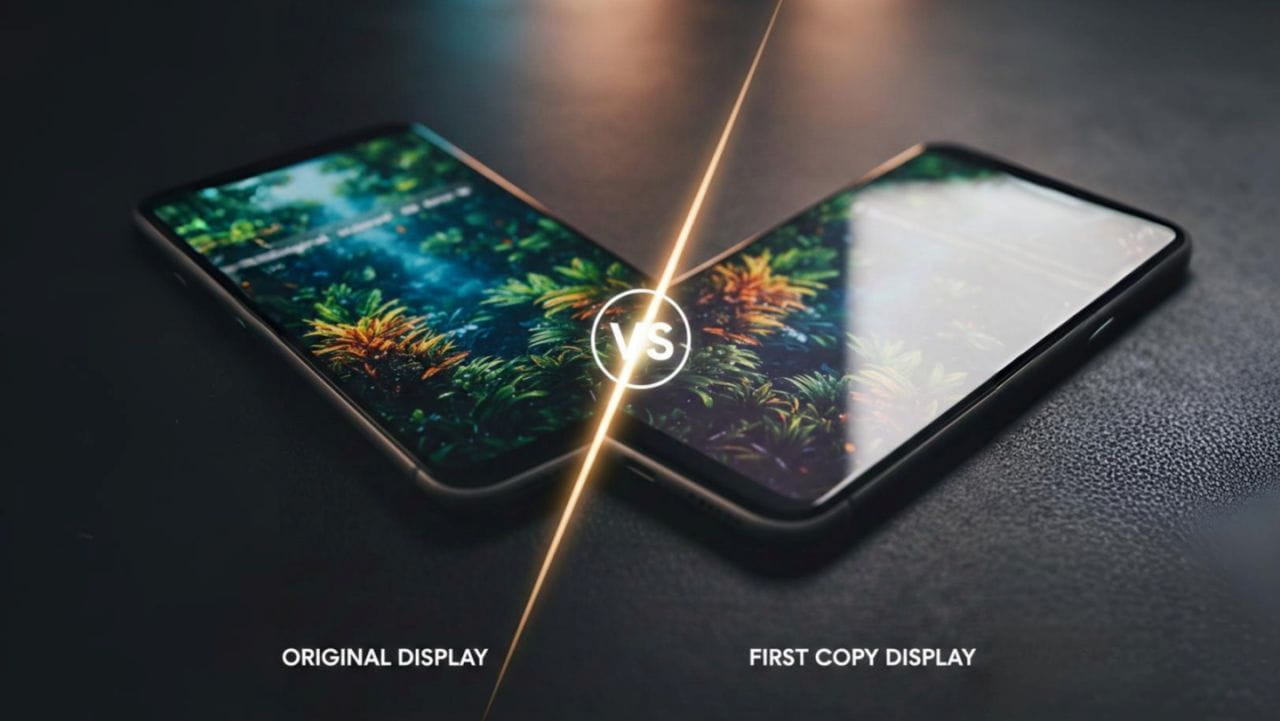
A broken phone display is one of the most common smartphone problems. Whether you use an Android phone or an iPhone, a cracked or damaged screen usually means a display replacement.
But here is where confusion begins.
When you visit a repair shop, you often hear terms like:
- Original display
- First copy display
- OEM screen
- Duplicate or fake screen
- Aftermarket display
Many users do not clearly understand the difference. Some only focus on price. Others assume all screens look the same.
A display is also called a screen, LCD, combo and folder in India by users as well as technicians.
In reality, choosing the wrong display can affect brightness, touch response, battery life, durability, and even resale value.
This guide explains everything in simple language. You will learn:
- What original and first copy phone displays actually mean
- The technical and practical differences
- How to identify a fake or duplicate screen
- When you should choose each option
- Common myths and mistakes to avoid
Whether you are a customer, a shop owner, or a technician in training, this guide will help you make better decisions.
What Is an Original Phone Display
An original phone display is a screen manufactured by the same company or authorized supplier that produced the phone.
For example:
- An original iPhone display is made by Apple’s official manufacturing partners
- An original Samsung display is produced using Samsung’s official AMOLED panels
Original screens are sometimes called:
- Genuine display
- OEM display – when sourced from official suppliers
- Factory display and OG diplay
Key Features of Original Displays
- Exact color calibration
- Correct brightness levels
- Smooth and accurate touch response
- Proper compatibility with sensors
- Same durability as factory-fitted screen
When you use an original display, your smartphone screen performs exactly like it did before damage.
What Is a First Copy Phone Display
A first copy display is a high-quality duplicate screen made by third-party manufacturers. It is not produced by the original phone company.
It is also called:
- Aftermarket display
- Duplicate or copy display
- Market OG display or 99% quality display
- Compatible display
The term “first copy” usually means it is a better-quality duplicate compared to cheaper copies. However, it is still not genuine.
Key Features of First Copy Displays
- Lower cost
- Similar appearance to original
- Acceptable touch response
- Slightly different brightness or color tone
- May use LCD instead of OLED in some models
Some first copy screens work reasonably well. Others may show issues over time.
Quality varies widely depending on manufacturer.
Original vs First Copy Display – Side by Side Comparison
| Feature | Original Display | First Copy Display |
|---|---|---|
| Manufacturer | Official brand supplier | Third-party factory |
| Price | Expensive | Cheaper |
| Brightness | Accurate and high | Slightly lower |
| Color Quality | Natural and calibrated | May look warmer or dull |
| Touch Response | Perfect and smooth | Slight delay possible |
| Durability | Stronger glass | Usually weaker |
| Battery Consumption | Optimized | May consume more |
| Resale Value | Maintained | Reduced |
| Warranty | Sometimes available | Rarely available |
Important Note: Not all first copy displays are the same. Quality can range from decent to very poor.
In India, the most famous brands of 1st copy displays are Crown, MCare, RD, GX, Maxbhi, etc.
Why the Difference Matters
Many users think:
“If the display works, why pay extra?”
Here is why the difference matters in real life.
1. Eye Comfort
Original screens have correct color balance. Cheap duplicate displays may cause:
- Eye strain
- Over-saturated colors
- Blue tint or yellow tint
If you use your phone 5 to 8 hours daily, this matters.
2. Touch Accuracy
In gaming or typing, a small delay can be frustrating.
First copy screens may have:
- Slight lag
- Missed touches
- Inconsistent response
This is especially noticeable in gaming or fast typing.
3. Battery Drain
Low-quality displays may consume more power.
Many repair technicians observe that some duplicate screens reduce battery backup.
4. Display Sensors
Modern smartphones include:
- Fingerprint sensor under display
- Face ID sensor
- Auto brightness sensor
A non-original screen may not be fully compatible and affect these functions.
Types of First Copy Displays in the Market
Not all duplicate screens are the same. There are usually three common categories:
1. High Quality Aftermarket
- Closest to original
- Good brightness
- Acceptable durability
- More expensive among copies
2. Standard Copy
- Moderate quality
- Slightly lower brightness
- Good for budget users
3. Low Quality Copy
- Cheap
- Poor touch response
- Color mismatch
- Easily breakable
The display of a more lower quality than ‘first copy’ is called ‘second copy’ or duplicate display.
The second copy display is only used when you want to just recover data, or use it for a very short-term and then discard the handset. The quality of graphics, touch function and viewing angle degrades drastically in second copy displays.
Always ask your technician which type they are installing. If you’re unsure whether a screen is genuine or duplicate, this guide explains everything clearly. Read our detailed post on how to check original vs fake mobile LCD before replacing any display.
How to Spot the Difference – Practical Checks
Here are practical steps you can use.
1. Check Brightness Under Sunlight
Take the phone outside.
Original displays remain clearly visible in sunlight.
Copy screens may appear dim.
2. Compare White Color
Open a blank white screen.
Original display – pure white
Copy display – yellowish or bluish tint
3. Touch Test
Try:
- Fast typing
- Multi-touch zoom
- Gaming gestures
Original screens feel smooth and accurate.
4. Viewing Angles
Tilt the phone.
Original screens maintain color consistency.
Copies may show color shift.
5. Display Thickness
Sometimes duplicate screens are slightly thicker. This can cause:
- Frame gaps
- Improper fitting
6. Check True Tone or Display Settings
On some iPhone models, features like True Tone may not work after installing a duplicate screen.
7. Use a Display Testing App
On Android devices, you can use display test disgnostic apps or to check:
- Dead pixels
- Touch grid accuracy
- Color uniformity
Common Myths About First Copy Displays
Myth 1 – First Copy Is Exactly Same as Original
Not true. It may look similar but internal quality differs.
Myth 2 – Customers Cannot Tell the Difference
Many users can notice brightness and color differences immediately.
Myth 3 – All Duplicate Displays Are Bad
Some high-quality aftermarket screens perform reasonably well.
The key is understanding trade-offs.
When Should You Choose Original Display
Choose original if:
- You own an expensive smartphone
- You plan to use the device longer
- You use the phone for gaming or professional work
- You want long-term reliability
- The phone is still under warranty
For flagship phones like high-end Android models or recent iPhone models, original screens are usually worth it.
When First Copy Display May Be Acceptable
It may be practical if:
- The phone is old
- Resale value is not important
- You drop and break screens frequently
- You need a temporary solution
- Budget is limited
- The device is a secondary phone
For example, replacing an old smartphone display with an expensive original screen may not be cost-effective.
With respect to technology, here is a good and extensive comparison between Super AMOLED and IPS phone displays for you to understand and make a better decision.
Real-World Experience From Repair Technicians
From practical repair experience:
- Many customers choose first copy to save money
- Some may return later complaining about brightness issues
- High-quality aftermarket screens perform much better than cheap ones
- Clear communication reduces disputes
As a repair professional, always:
- Explain the difference clearly
- Show sample displays if possible
- Mention warranty conditions
Transparency builds trust.
Real Case Study – Customer Complaint After Copy Display Installation
A customer replaced a mid-range Android smartphone display with a low-cost duplicate screen. Within 3 months, the brightness dropped and touch lag appeared during normal use and gaming. The customer returned for replacement. The second time, a higher-grade aftermarket display was used, which performed better.
Pros and Cons
Original Display
Pros
- Best quality
- Long lifespan
- Accurate color and touch
- Better resale value
Cons
- High cost and expensive
- Not always available for older models
First Copy Display
Pros
- Affordable
- Easily available
- Good for budget repairs
Cons
- Quality variation
- Possible slow touch or brightness issues
- Lower durability
Display Prices Comparison Table
| Phone Category | Original Display | First Copy Display |
|---|---|---|
| Budget Phone | ₹2,500 – ₹4,000 | ₹1,200 – ₹2,000 |
| Mid-range | ₹5,000 – ₹9,000 | ₹2,500 – ₹4,500 |
| Flagship | ₹12,000 – ₹25,000 | ₹5,000 – ₹10,000 |
Confused about screen damage costs? Read our detailed guide on Front Glass Repair vs Full Display Replacement: Cost Comparison to understand which option saves you more money.
Common Mistakes to Avoid
- Choosing the cheapest option without asking about quality
- Not testing the screen before leaving the shop
- Assuming all “OEM” labeled screens are original
- Ignoring sensor functionality
Always test:
- Touch
- Brightness
- Fingerprint sensor
- Front camera alignment
- Overall fitting
before final payment.
Before handing over your device to any technician, make sure you know the common frauds and scams done by a few dishonest technicians. Read our detailed guide on 7 Common Mobile Phone Repair Scams in India to stay safe and informed.
Impact on Resale Value
If you plan to sell your phone later:
- Buyers often check display quality
- Some devices show warning messages for non-original screens
- Resale value may drop
Original display maintains market trust.
Safety and Data Concerns
Replacing a screen does not usually affect data.
However:
- Always back up your phone
- Visit trusted repair technicians
- Avoid roadside repairs for expensive smartphones
Good installation is as important as display quality.
FAQs
1. Is first copy display safe to use?
Yes, if it is a good-quality aftermarket screen. However, durability and performance may not match original.
2. Can a technician detect first copy display easily?
Yes. Brightness, color tone, and part codes often reveal whether it is original or duplicate.
3. Does first copy display reduce battery life?
Some low-quality screens may consume slightly more power. High-quality copies usually show minimal difference.
4. Will fingerprint sensor work on copy display?
It depends on the phone model and display quality. Some under-display sensors may not work properly in second copy LCDs.
5. Is OEM display same as original?
Not always. Some sellers misuse the term OEM. True original screens come from official suppliers.
6. Should I repair or replace my old phone instead?
If the display cost is very high compared to phone value, upgrading may be smarter.
Conclusion
Understanding the difference between original vs first copydisplay helps you make informed decisions.
Original screens offer:
- Best performance
- Accurate colors
- Long durability
- Higher resale value
First copy displays offer:
- Lower cost
- Acceptable performance for budget use
The right choice depends on:
- Your budget
- Phone model
- Usage pattern
- Long-term plans
Always ask questions. Test before paying. Choose trusted technicians.
A display is not just glass. It is the main interface between you and your smartphone. Making the right choice ensures better performance and fewer regrets.