
Introduction
If you want to earn from the mobile phone industry, two paths usually come up first: working as a mobile repairing technician or starting a mobile repairing shop business. Both deal with smartphones, both can generate steady income, and both attract beginners who want a practical, skill-based career.
When entering this field, most people face one key decision:
Should I work as a mobile repairing technician (job), or should I start my own mobile repairing shop business?
A mobile repairing job offers skill-driven income with lower risk, while a shop business offers higher profit potential but requires investment and management skills. Many people choose one without fully understanding the salary structure, profit margins, daily work, or long-term growth.
This guide explains both options in depth. You will learn how each option works, how much you can realistically earn, what skills or investment you need, and which choice fits different goals. By the end, you should be able to decide with confidence.
Understanding the Two Career Paths
Before comparing salary and profit, it helps to understand what each path actually involves.
What Is a Mobile Repairing Job?
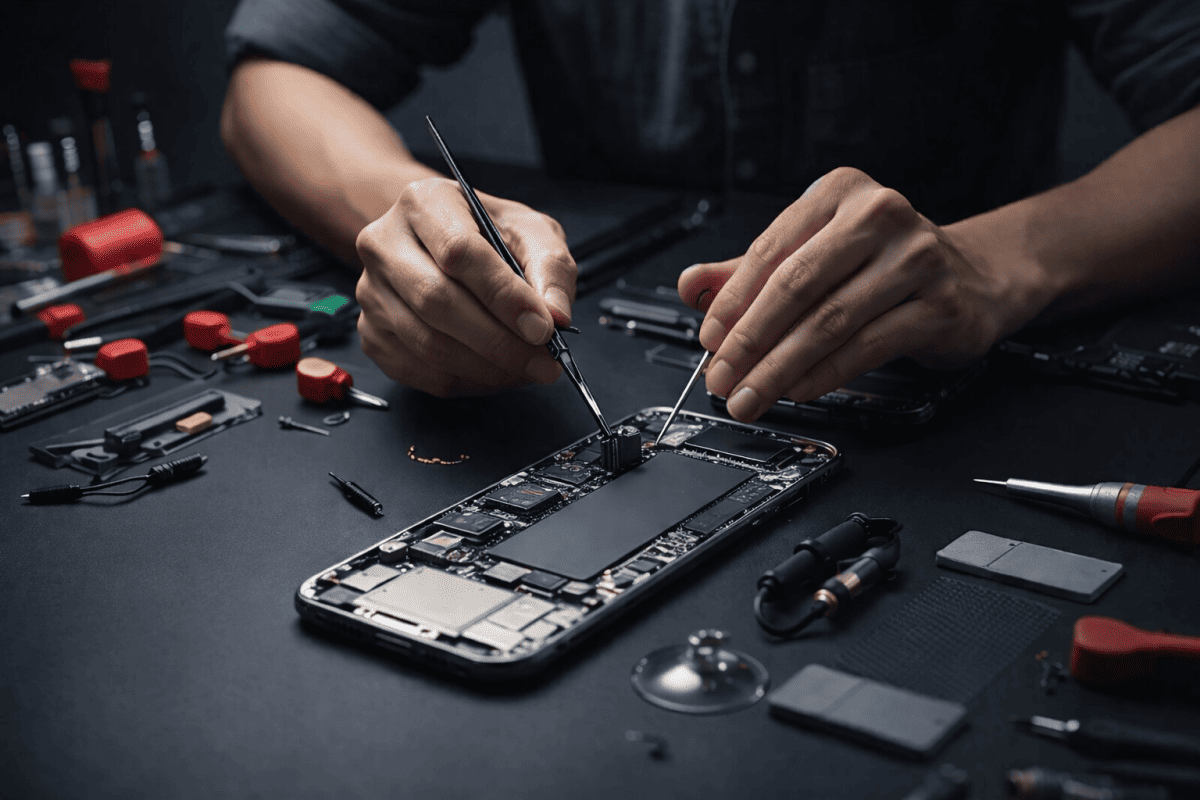
A mobile repairing job means fixing smartphones and mobile devices. This can include hardware and software work, such as:
- Screen replacement
- Battery changes
- Charging port repair
- Speaker and microphone fixes
- Water damage repair
- Software flashing and updates
- Android and iPhone troubleshooting
You may work:
- In a local repair shop or
- At a service center
In a job role, you are usually paid a monthly salary or per-repair commission.
What Is a Mobile Shop Business?
What Is a Mobile Repairing Shop Business?
A mobile repairing shop business means running your own repair center. You are not just a technician; you are also the business owner.
Your responsibilities include:
- Repairing phones or supervising repairs
- Selling new smartphones
- Selling refurbished or used phones
- Selling accessories (cases, chargers, earphones)
- SIM cards and recharge services
- Basic phone setup and data transfer
- Often, basic repairing services as an add-on
- Managing tools, spare parts, and inventory
- Handling customers and pricing
- Paying rent, utilities, and expenses
- Marketing and local promotion
Income here comes from sales of phones and accessories and repair charges and after minusing expenses, what remains is your profit. Here is a detailed guide on investment and profit in mobile repairing shop business for those who want to opt for business.
Skill Requirements: Job vs Business
Skills Needed for a Mobile Repairing Job
Mobile repairing technicians need a set of skills to be able to fix all kinds of issues and problems.
This path is skill-heavy. You need:
- Knowledge of smartphone components
- Hands-on repair experience
- Understanding of Android and iOS systems
- Ability to diagnose problems accurately
- Patience and attention to detail
With practice, your value increases. Advanced technicians earn more because fewer people can do complex repairs.
Skills Needed for a Mobile Shop Business
A shop requires both technical and business skills, such as:
- Sales and communication
- Repair knowledge or hire experienced technicians
- Basic accounting and stock management
- Understanding smartphone models and pricing
- Negotiation
- Customer handling and trust-building
You can hire technicians, but technical knowledge is still important to maintain quality and trust.
Salary in a Mobile Repairing Job
Let’s talk about income from employment or service-based repair work.
Entry-Level Salary
For beginners with basic skills:
- Monthly salary is usually less
- Income improves with experience
Experienced Technician Salary
With experience and advanced skills:
- Income increases steadily
- Complex repairs pay more
- Reputation leads to repeat customers
Experienced technicians often earn more than freshers.
Freelance and Independent Repair Income
Many technicians move to freelance work. This allows:
- Charging per repair instead of fixed salary
- Flexible working hours
- Higher income if demand is strong
However, income may fluctuate depending on:
- Location
- Competition
- Customer trust
The average salary of mobile repairing technicians per month also depends on theirs skills, experience and their employers.
Profit in a Mobile Shop Business
Unlike a job, a business focuses on profit, not salary.
Initial Investment
Starting a mobile shop usually requires:
- Shop rent or space
- Initial stock of phones
- Tools and spare parts
- Accessories inventory
- Display and security setup
- Licenses and basic utilities
This makes the entry barrier higher than a repairing job. Here are a few tips to increase the profit of your mobile phone repairing shop business.
Profit Margins Explained
Mobile shop profits come from multiple sources:
- New smartphones: Low margin, high volume
- Repairs: Huge margins
- Accessories: Higher margin, steady sales
- Refurbished phones: Moderate margin
- Service add-ons: Good margin
Accessories and services often bring more profit than phone sales themselves. Alternatively, you can also apply for a franchise and set up an authorised mobile phone repair service centre of a reputed brand to build a trusted and profitable business.
Monthly Profit Potential
Profit depends on:
- Location and foot traffic
- Product mix
- Pricing strategy
- Customer trust
Well-managed shops can generate steady monthly profit, but poor stock planning can lead to losses.
| Factor | Mobile Repairing Job | Mobile Shop Business |
|---|---|---|
| Income Type | Fixed or per-repair | Sales-based profit |
| Initial Cost | Low | High |
| Monthly Income Stability | Medium | Variable |
| Growth Speed | Gradual | Faster with good sales |
| Risk Level | Low | Medium to High |
| Skill Dependency | High | Medium |
| Stress Level | Moderate | High during slow sales |
Common Mistakes People Make
Underestimating Skill Requirements
Many believe mobile repairing is easy. In reality:
- Modern smartphones need practice
- Continuous learning is necessary
Some other common mistakes committed by mobile phone repair technicians can ruin their job or business prospects.
Opening a Shop Too Early
Starting a shop without experience can lead to:
- Incorrect diagnosis
- Customer dissatisfaction
- Financial losses
Experience first reduces risk.
Ignoring Customer Trust
In both jobs and shops:
- Honesty matters
- Clear pricing builds long-term income
Real-World Use Cases
Case 1: Skill-Focused Individual
Someone who:
- Enjoys hands-on technical work
- Prefers predictable income
- Wants low financial risk
usually does better with a mobile repairing job.
Case 2: Business-Oriented Individual
Someone who:
- Enjoys sales and customer interaction
- Can manage inventory and cash flow
- Is comfortable with business risk
may earn more through a mobile shop business.
Common Misconceptions
“Mobile Repairing Shop Always Earns More”
Not always true. Most shops earn but some shops may struggle due to:
- Low customer count
- Unsold inventory
- Online competition
Profit is not guaranteed.
“Repairing Jobs Have No Growth”
This is also false. Skilled technicians can:
- Do advanced repairs
- Offer premium services
Technicians can get employed by applying for latest mobile repairing job vacancies in India. You have to be patient and understand that growth in jobs depends on skill level and reputation.
Pros and Cons
Mobile Repairing Job
Pros
- Low investment
- Skill-based income
- Lower financial risk
- Faster entry
Cons
- Income depends on skill
- Physical strain
Here are some of the best advantages of a career in mobile repairing.
Mobile Shop Business
Pros
- Higher income potential
- Multiple revenue streams
- Business scalability
Cons
- Higher investment
- Inventory risk
- Sales pressure
Which Option Is Better for Beginners?
For most beginners:
- A mobile repairing job is safer to start
- It builds industry experience
- Requires less money
- Can later transition into a business
Many successful shop owners started as technicians first.
Practical Tips Before Choosing
- Learn basic mobile repairing even if you plan a shop
- Study local demand before investing
- Avoid large inventory at the start
- Focus on customer trust, not quick profit
- Upgrade skills regularly as smartphone technology changes
Frequently Asked Questions (FAQs)
1. Can I start a mobile repairing shop without job experience?
It is possible, but risky. Prior job experience greatly improves success chances.
2. Which option has more stable income?
A repairing job usually offers more predictable income, especially for skilled technicians.
3. Is technical knowledge required for a mobile shop?
Not necessary, but basic technical knowledge and hiring experienced technicians helps in building customer trust and service quality.
4. Is mobile repairing still a good career?
Yes. Smartphones remain essential, and repair demand continues due to high device costs.
5. Can I start mobile repairing from home?
Yes. Many technicians start with a small home setup and expand later.
Conclusion
Choosing between a mobile repairing job and a mobile shop business depends on your goals, skills, and risk tolerance.
- If you want low risk, skill-based income, mobile repairing is a strong choice.
- If you want higher earning potential and business growth, a mobile shop can be rewarding—but only with proper planning.
There is no single “best” option for everyone. Many people start with repairing, gain experience, and then move into business. Understanding both paths helps you make a smarter, more confident decision.
Take time to assess your strengths, local market conditions, and long-term plans before choosing.